
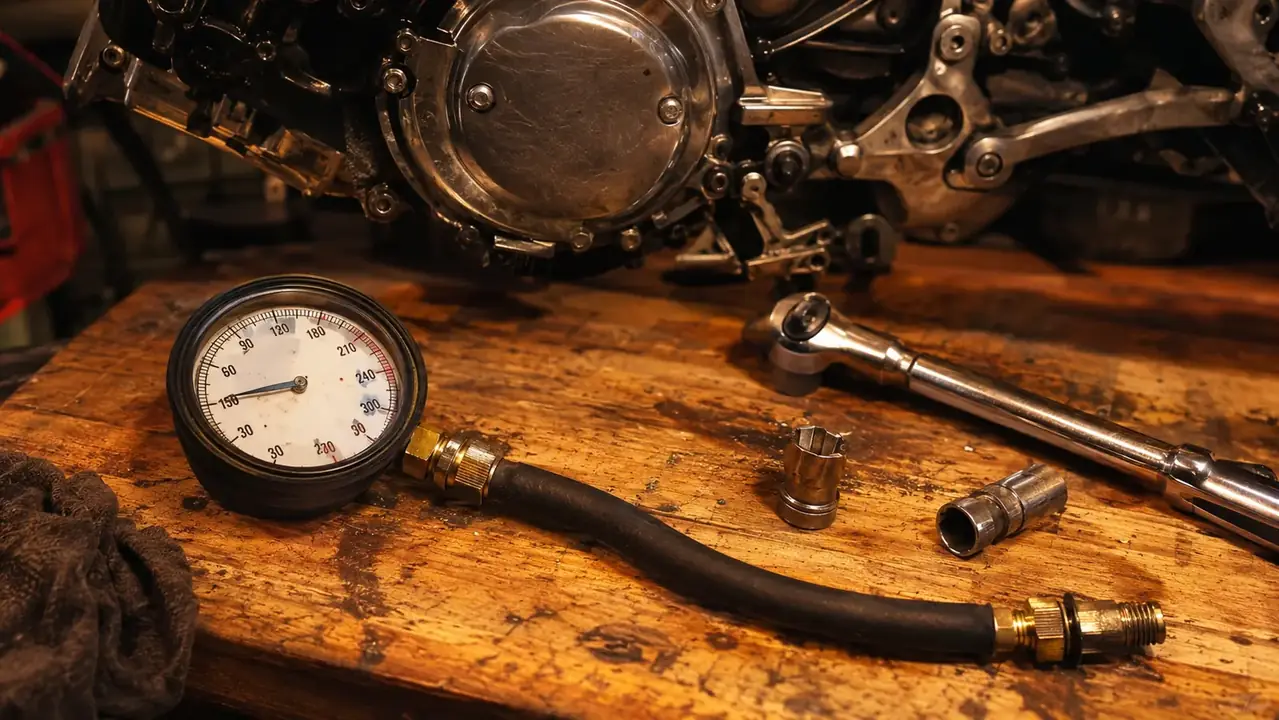
When a bike or an old car acts up, most people start throwing parts at it. New plugs because it is easy, new wires because someone on a forum said so, a carb rebuild because they are tired of looking at it. I spent years doing exactly that and burning money before I owned a compression tester. One reading on the BETOOLL HW0130 kit told me in ten minutes what a weekend of guessing never would, that the top end was tired and no amount of new parts was going to fix it. Every shed should have one, and here are the ten reasons why.
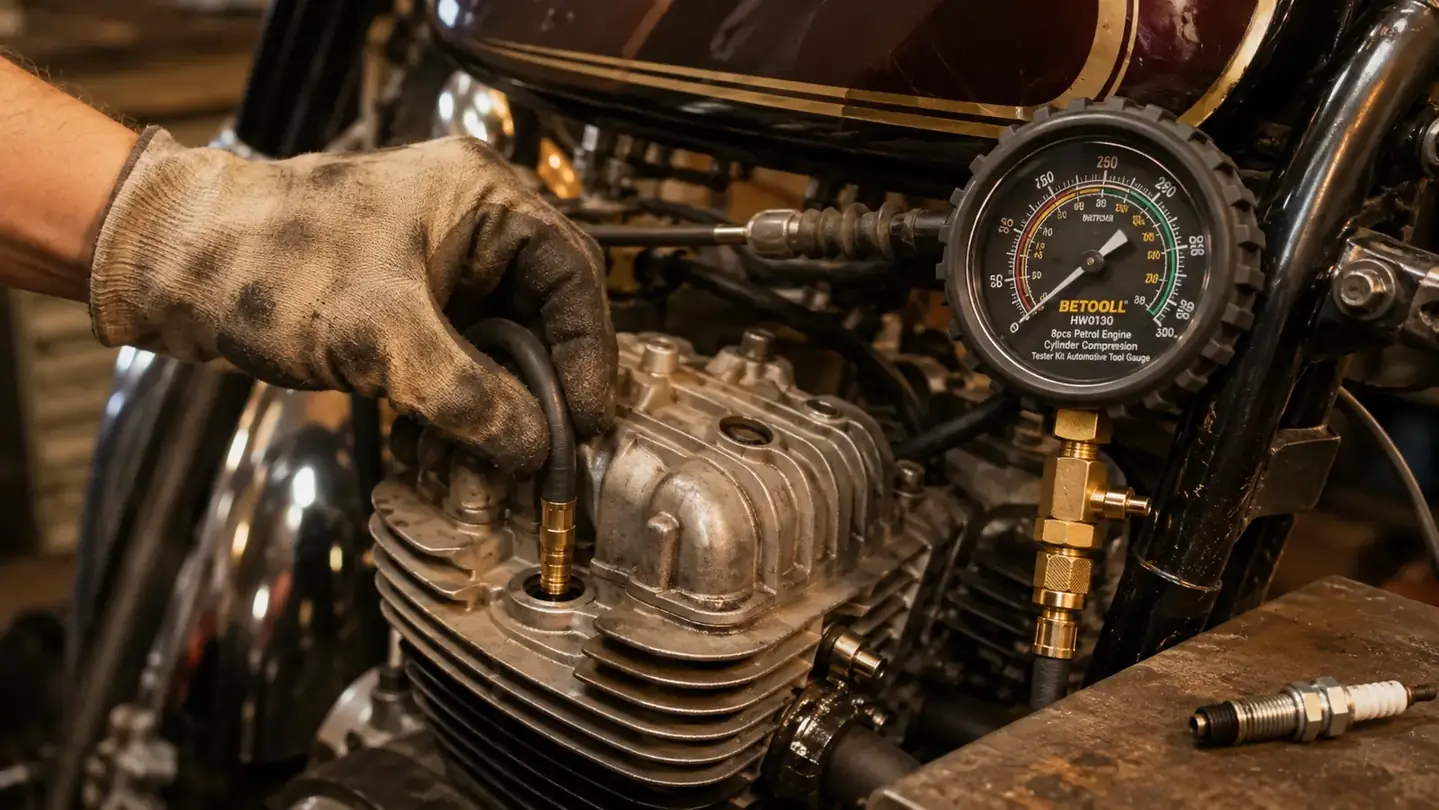
A compression tester is a simple gauge on a hose with a fitting that screws into the spark plug hole. You crank the engine a few times and it shows the pressure each cylinder builds. That single number tells you more about the condition of rings, valves, and head gasket than a spec sheet ever will, and it is the same tool whether you are checking a 125cc thumper, a big twin, or the straight-six in your old truck. Here is why I keep the BETOOLL kit in reach instead of buried in a drawer.
A compression tester costs less than one shop trip and settles engine arguments in ten minutes
The BETOOLL HW0130 is an 8-piece kit with a gauge, a long hose, and enough threaded adapters to cover most motorcycle, ATV, and small-car spark plug threads. It is the tool I grab before I tear an engine down or dump money into parts.
Amazon Check Today's Price on Amazon →It tells you if the engine is worth buying before you hand over cash
Looking at a used bike, the seller hands you the story and the bike looks clean, but clean paint never told anyone the condition of the rings. A two-minute compression test in the driveway tells you whether the motor pulls healthy numbers on each cylinder before you commit. I have walked away from bikes with a pretty tank and one dead cylinder that a compression reading exposed. It is the cheapest inspection you will ever run.
It turns a rough-running bike into a scatter diagram instead of a guessing game
A misfire and a worn valve feel the same from the seat. You pull each plug, ground it, and read the cylinders one by one instead of guessing. If three cylinders read 165 and one reads 95, you have found the problem cylinder and it is not a mystery anymore. That one number ends days of forum-reading and part-throwing.
It catches a worn ring or scored bore before you spend a dime on parts
The worst sound a builder hears is the one that should have been caught earlier. A cylinder that reads low on its own but comes right back up when you add a squirt of oil is pointing straight at rings and a worn bore. Know that before you order a carb rebuild kit you do not need, and you save the money for the top-end work the engine actually wanted.
It splits the difference between rings and valves on a tired engine
The wet test is the part most people never learn. Low compression, you add a little oil down the plug hole and crank again. If the number jumps, the oil sealed the rings, so the rings are your problem. If it stays flat, the leak is in the valves or head gasket, where oil does not reach. Two readings and you have the diagnosis a shop would bill an hour for.
It verifies a rebuild before you bolt the head back on and fight the starter
After a top end, rings, or a valve job, a compression reading is the proof the work is right before the engine has to do anything. You own a build, you want to see all cylinders land within a few psi of each other on the first try. It catches a stuck ring or a mistimed valve before you reassemble the whole bike and find it on the test ride.

It tells you about valve and cam timing without pulling any covers
Compression is a leak check, but it is also a timing check of sorts. A cylinder that reads low in a way a wet test does not fix, across all cylinders, can point to a cam that is off a tooth or valves seating wrong. You get that signal without pulling the cover to look. It narrows the job before you spend an afternoon finding out where to start.
It is one tool that covers bikes, cars, big rigs, and lawn engines
I build bikes, I tow, and I wrench on old cars, and the same tester handles all of them. The BETOOLL kit ships with a handful of threaded adapters that cover the common spark plug sizes across motorcycles, ATVs, cars, and small engines. One tool on the shelf beats a drawer full of single-purpose gadgets, and it does not care what brand of machine you bolt it into.
It is cheap next to the diagnosis it saves you from buying
A shop charges you for the diagnostic hour the minute the lift rolls in. The kit runs about today's price on Amazon, and one trip to a shop for a compression check covers it. After that it is free forever. For a guy who owns more than one running machine, it is about the best tool-per-dollar value in the shop.
It gives you a baseline so you actually know when the engine is going bad
Write down the numbers the day you buy a machine and you have a reference. Six months later when it starts feeling soft, run it again and compare. A drop of twenty psi on a cylinder is a change you feel as much as read, and it tells you the engine is heading south long before it strands you. A baseline turns vague unease into an actual number you can act on.
It is simple enough to learn in one afternoon and honest about what it cannot do
There is no setup to it. Pull a plug, thread in the adapter, hold the throttle open, and crank. No computer, no app, no subscription. And it is honest about its limits, it checks ring and valve sealing, not fuel, spark, or carburetion, so you know exactly what it is telling you. A tool that is this honest about its job is the kind that earns the shelf space.
What I'd Skip
A compression tester is not a leakdown tester, and if you are rebuilding racing motors or chasing a mystery leak you cannot find, you may want a leakdown gauge instead, it checks the actual leak rate in percentages rather than just peak pressure. And the budget kits, including the BETOOLL, use a push-in hose and all-thread fittings that can leak a little on a stubborn plug hole if you do not press the hose in square, so seat it firmly and you are fine. If you only ever own one bike that you ride every week and never tear down, this skips down the priority list, your alternator and your ears will find most problems first. But if you buy used, build, or wrench on more than one machine, it does not stay in the drawer for long.
One compression reading told me in ten minutes what a weekend of throwing parts at it never would, that the top end was tired.
If you buy used bikes, build motors, or just own more than one machine, a compression tester pays for itself the first time it saves you from a wrong part order
The BETOOLL HW0130 8-piece kit gives you the gauge, the hose, and the adapters to check the health of nearly any small engine you own. It settled my engine questions before I spent a dime on parts, and it will do the same for yours.
Amazon Check Today's Price on Amazon →