
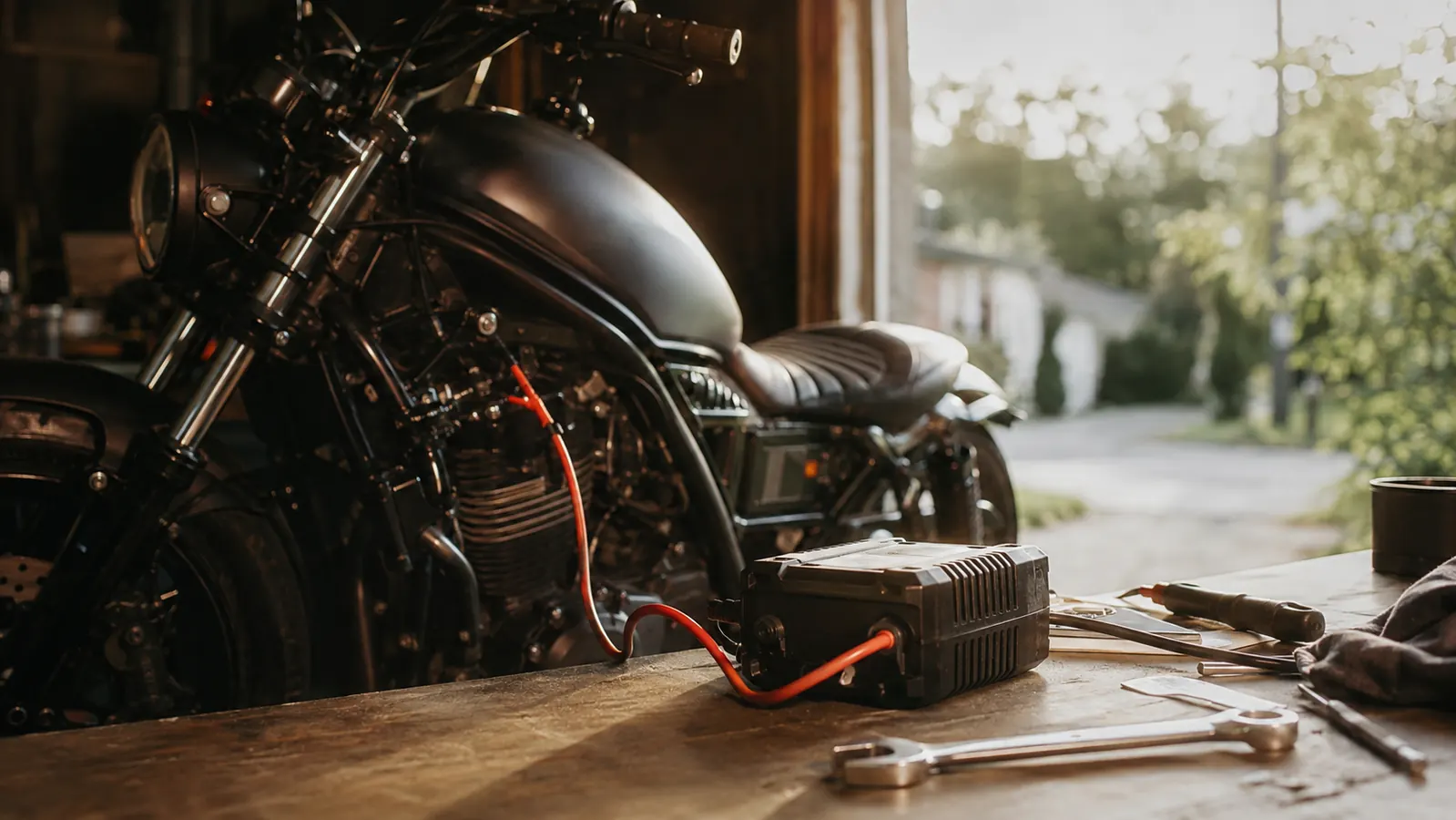
Every spring I knew exactly what the first ride of the season was going to sound like. I'd roll a bike out of the corner of the shop, square up on the seat, thumb the starter, and get that flat, hopeless click from a battery that had quietly given up somewhere back in November. Not a slow crank. Not a weak one. A click so dead it wasn't even trying. The thing that finally ended those mornings, once and for all, is a Battery Tender Junior sitting in my shop.
The first time it was my fault. A bike I'd had since spring sat all winter with a charge that was fine when I parked it, and by April it was a brick. I jump-started it from the truck, ran it an hour, and called it solved. The next winter the same bike died the same way, and the next, until I got tired of the ritual: drag the bike out, find the cables, clip the jump pack, hold my breath and hope.
The frustrating part is the failure is completely predictable. A lead acid battery sitting through the cold loses charge on its own, and the parasitic draw from the clock and the memory in the ECU finishes the job. Nothing is wrong with the battery. It just sits there bleeding voltage until one morning there isn't enough left to spin the starter.
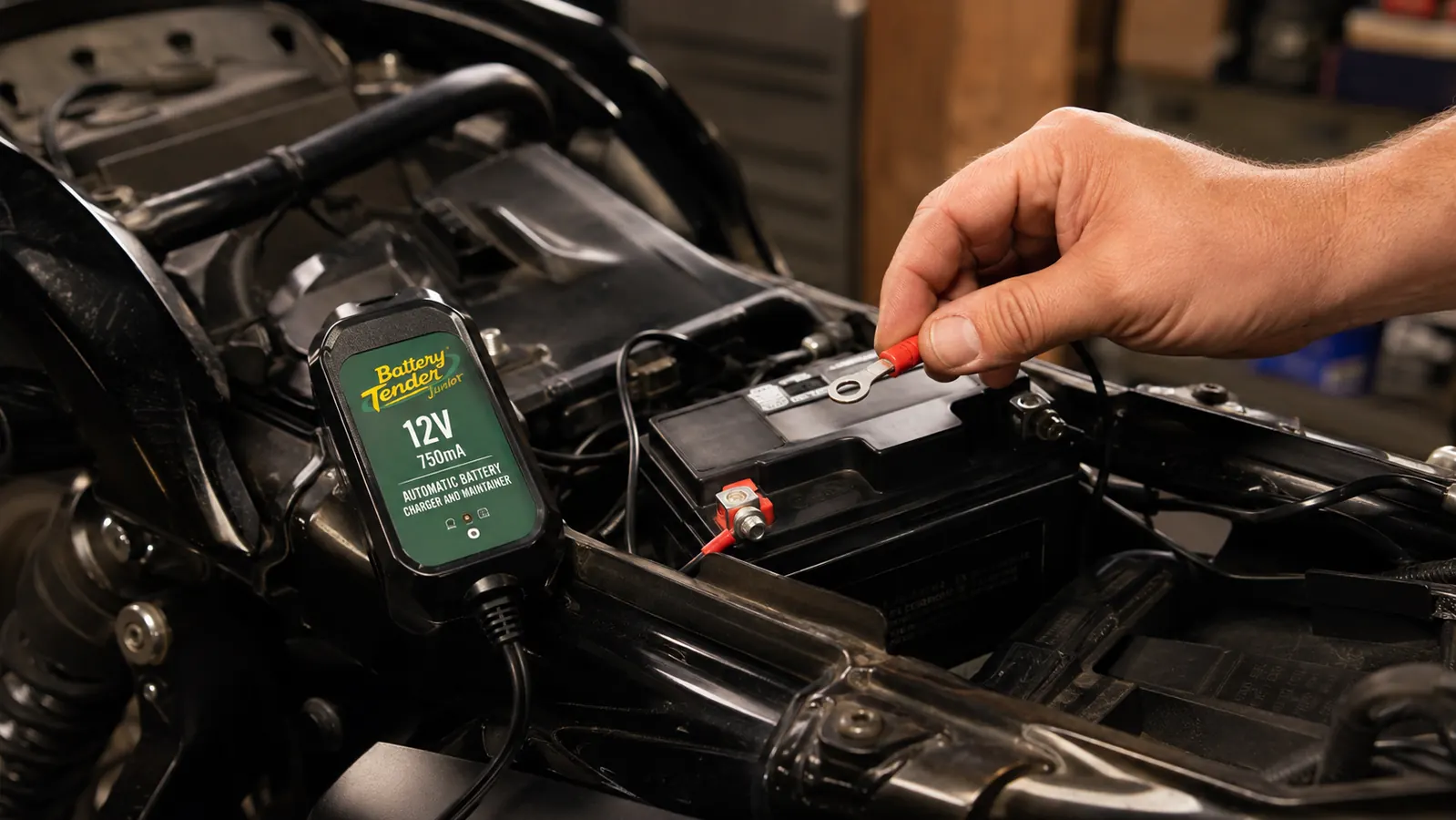
What broke the cycle for me is a Battery Tender Junior. It is the little maintainer that you leave plugged in on a bike that's going to sit. I ran the leads onto the battery, tucked the connector where I could reach it without pulling the seat, and plugged it in the day I parked the bike for the winter. Then I forgot about it until spring, walked over, unclipped it, and the bike fired on the second crank.
A battery that sits all winter dies by spring. The Battery Tender Junior is just a small maintainer that keeps the charge topped, and it turned my dead-battery April into a fire-it-up-and-go morning.
End the Springtime Dead Battery for Good
If you've ever jump-started a bike that sat since fall, a Battery Tender Junior is the cheap fix that keeps the charge topped all winter and hands you a bike that fires in spring.
Amazon Check Today's Price on Amazon →Here is what the Junior actually does, because the name oversells it a little. It is a 750mA maintainer, not a full charger. It is not going to bring an already-dead battery back to life in an afternoon, and it is not a boost pack. What it does is hold a battery that is still healthy at full charge, floating it gently so it does not overcharge and does not cook the plates. It is built for the bike that sits, which is exactly the bike I was having trouble with.
The wiring is where most people overthink it and where I almost did too. You connect the ring leads to the battery terminals and run the pigtail out to somewhere you can reach, usually under the seat or along the frame. Then you just plug the wall side in. The incoming side carries a quick-disconnect, so in spring you unplug the wall cord, leave the pigtail on the battery for the season, and ride. My bikes keep the leads mounted year round, so it's seconds to hook them back up when they come off the road again.
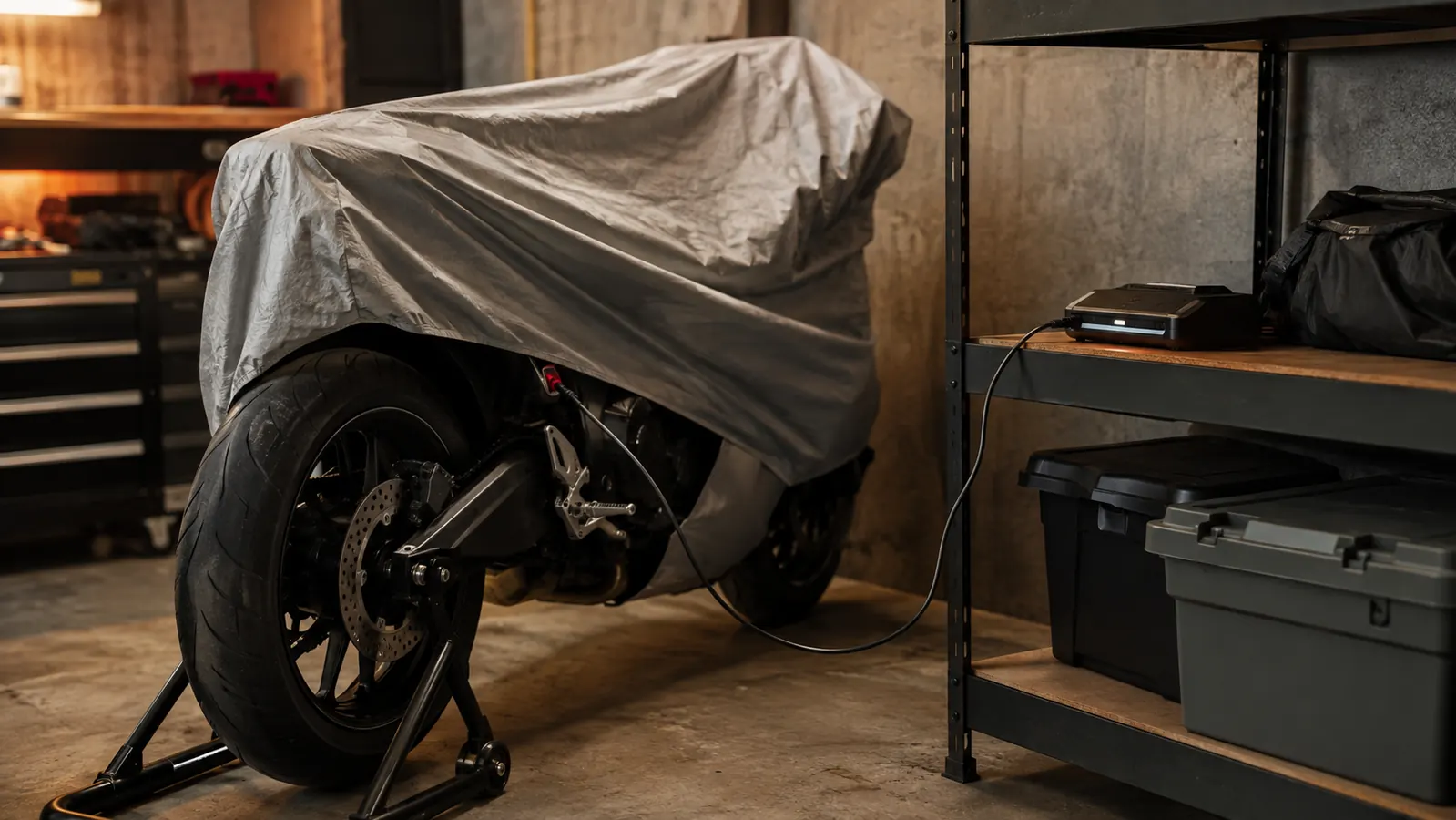
What sold me was how little it actually does. I expected the charging behavior to be complicated, some app, some blinking display, some setting I had to get right. There is none of that. You plug it in, a light tells you it's charging, and it switches to a float when the battery is full. It holds that state all winter and stops when it's done. A maintainer this simple is exactly what I want for a battery that is going to sit for four months.
The thing that made the difference for me is doing it at parking time, not waiting until the battery is already dead. Five minutes in fall beats an hour on your knees in April with a jump pack. Since I started leaving the Junior on anything that was going to sit for more than a couple of weeks, I have not jump-started a single bike in the shop. That is three winters of mornings where the bike just started, and I'll take that over the cable dance every single time.
I also started using it on more than the motorcycles. Anything in the shop with a 12V battery that sits, the lawn tractor and the welder and the old rig I'm fiddling with, gets a turn on it during the off season. One unit moves around and covers whatever needs covering. I've only got one of them and it handles the whole rotation, which tells you how small the actual draw is on a healthy battery that just needs to be held.
It does have limits, and I'll be straight about them. The 750mA output is slow, so if you plug it into a battery that's already flat you can wait a long time, sometimes needing a full charger first. And a battery that's genuinely worn out, one that won't hold a charge at all, will still die on a maintainer because it can't hold the float. A tender keeps a good battery good. It does not resurrect a bad one.
What I'd Tell You If We Were Sitting at My Kitchen Table
If you've got a bike that sits through the cold months, stop jump-starting it and just park it plugged in. You don't need the biggest tender on the shelf for a single street bike. A Battery Tender Junior that floats the charge is plenty. Clip the leads on at parking time, forget it exists, and in spring the bike fires like it never sat at all. It is the cheapest insurance I keep in the shop, and it ends the single most predictable motorcycle problem there is. I wish I'd started doing it a decade earlier.
Park It Plugged In This Winter
Keep every bike that sits ready to crank with a Battery Tender Junior. Hook the leads on at parking time and you'll never chase cables in the spring again.
Amazon Check Today's Price on Amazon →