
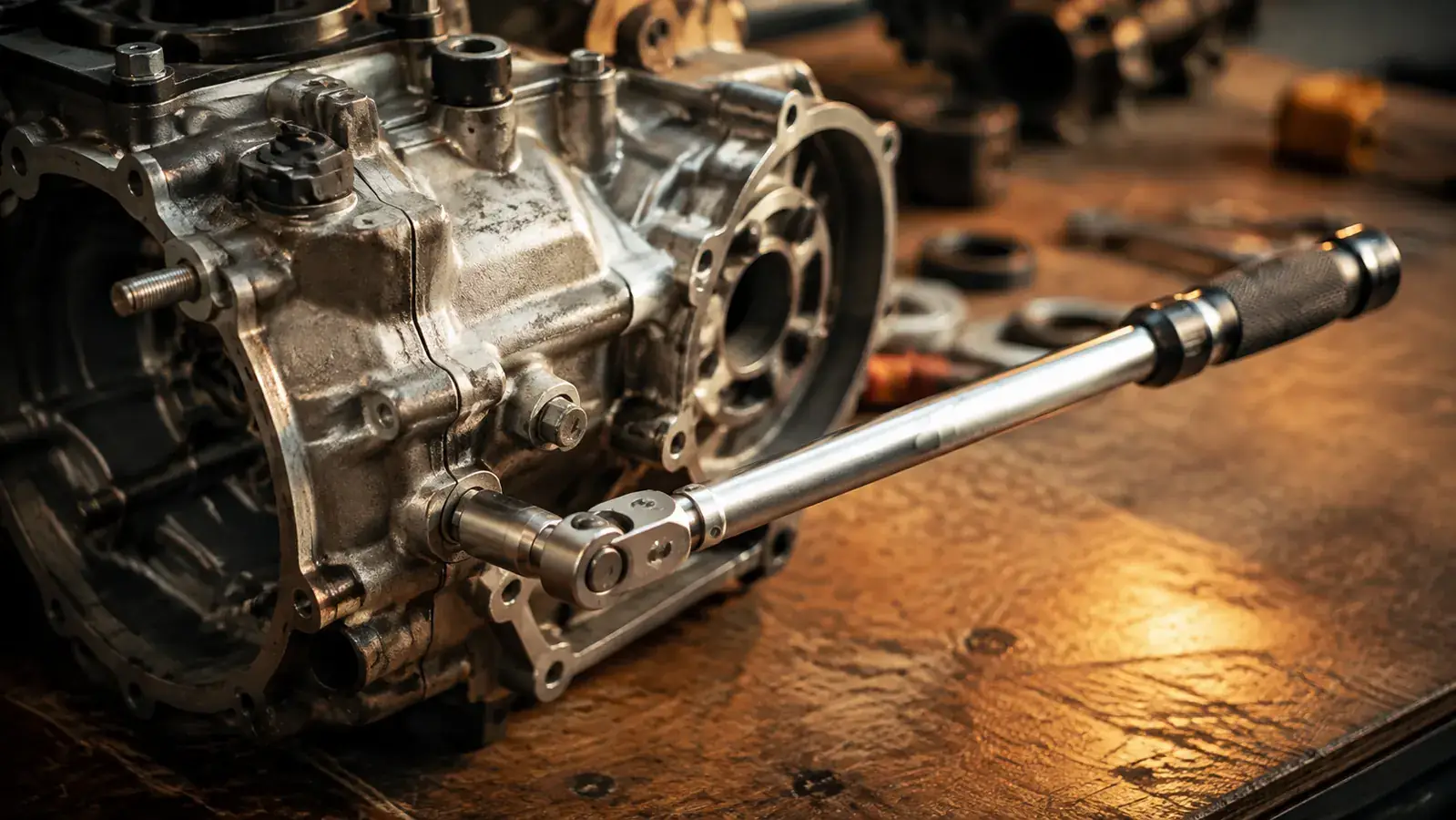
This is the wrench I bolted my last five builds together with, so I can tell you exactly what the LEXIVON LX-183 does and, more importantly, what it does not do after eighteen months of shop life. If you are rebuilding a top end or just torqueing your triple clamps back down after swapping forks, you already know the drill. A number is stamped in a service manual, and you either hit it or you are guessing. Try torquing a crankcase thread on a 1982 CB750 by feel and learning the hard way that aluminum does not forgive a firm tug, and you understand why I stopped guessing a long time ago.
I run a 1/2-inch drive for the big hardware: engine covers, axle nuts, suspension clamps, the stuff that has to come down to a real number or it fails three thousand miles down the road. The LEXIVON LX-183 has been the one in my hand for a year and a half. Mine has come off the peg, been dropped twice onto concrete, lived through a full top end and a couple of valve checks, and it still clicks where it is set, every single time. That is the whole review in one sentence, but let me walk you through the actual jobs so you know I am not just repeating the box.
The Quick Verdict
A 1/2-inch click torque wrench that reads to 150 ft-lb, clicks clean even down in the teens, and keeps its calibration through ordinary shop abuse, for a current price that makes it the obvious first torque wrench a builder should buy.
Amazon Check Today's Price →Set it, hear the click, move on to the next bolt
If you are tired of torquing by feel and crossing your fingers on axle nuts and head bolts, this is the wrench that ends it. It covers 10 to 150 ft-lb, which is the whole range a motorcycle build touches.
Amazon Check Today's Price on Amazon →How I've Used It
The LX-183 lives on the peg near my bench with the 1/2-inch sockets, not in a drawer, because it gets used on almost everything I wrench. My rule with any new torque wrench is that it earns trust in stages, not on day one. For the first couple of weeks I treated it like I was still getting to know a stranger. I would torque a cover bolt to spec, mark it, back it out, torque it again, and see whether the click landed in the same spot. It did, consistently. That is the single most important test for a click wrench, and it passed without drama.
Over eighteen months it has done the big jobs and the boring daily ones. The big jobs include cylinder head bolts on a 650 twin, cam caps at 16 foot-pounds, clutch cover bolts that snap if you breathe on them wrong, and a front axle nut on a bike I built from a bare frame. The daily stuff, holding down brake caliper bolts and the sprocket nut on chain swaps, might be the more honest test, because that is where a lazy guy skips the torque wrench entirely and convinces himself a firm grunt is close enough. I stopped doing that years ago, and this wrench is why.
A couple of habits keep any click wrench honest, and they have served me with this one. First, I drop the collar back to its lowest setting when I hang it up, so the internal spring stays relaxed instead of sitting under load. Fifteen months in I had the handle off and gave the mechanism a light coat of oil, and it still feels the same as the day I got it. There is no battery and no digital readout to argue with, just a spring and a click, which is exactly what I want out of a torque wrench. I do not want electronics on the one tool that has to be absolutely honest.
The click is the whole story. It is a clean, audible snap with a comfortable drop in the handle, not a mushy feel that leaves you wondering whether it tripped. On a small case bolt at the bottom of the range the click is short but you feel it. On a front axle nut at 85 ft-lb the head drops and clicks hard enough that there is no mistaking it, and no chance you grunt past the number and keep turning the way you do with a plain ratchet and a lot of hope. I have torqued the same sprocket nut a dozen times and every one of them landed at the same click.
The Range and Why 150 ft-lb Is the Right Window
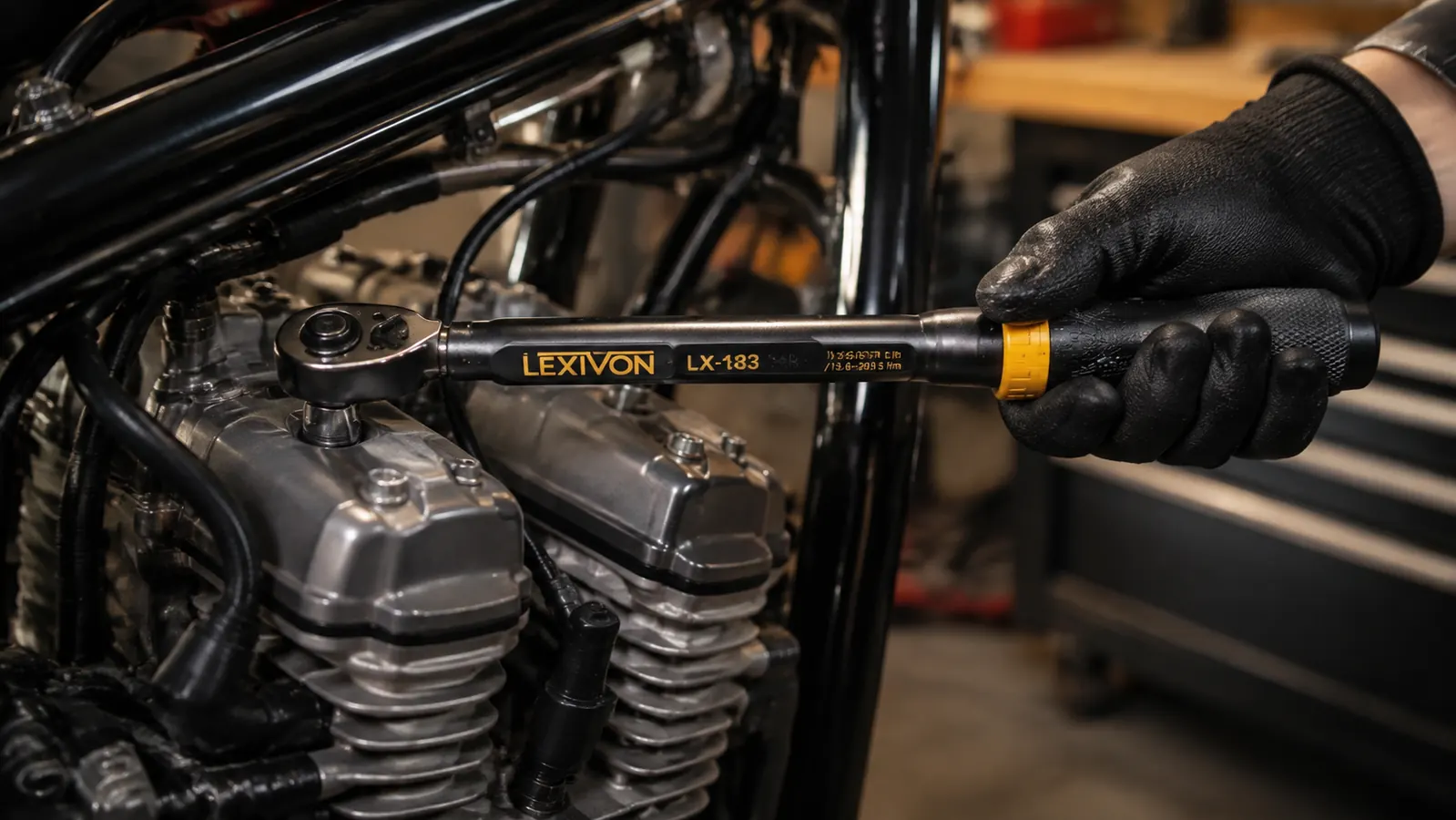
The LX-183 reads 10 to 150 foot-pounds, with the newton-meter scale printed right below the foot-pound numbers on the shaft. That is a genuinely useful window for motorcycles and for a lot of the hot rod work parked beside my bikes. There is almost nothing on a bike that needs more than 150 ft-lb, and the few things that come near that end, like a stubborn rear axle nut, sit inside the range comfortably instead of at the very edge where a cheap wrench's inaccuracy would hurt the most.
The low end matters just as much, and this is where I will be straight with you. Click torque wrenches are known for being unreliable at their very bottom. A wrench rated 10 to 150 is not honest at exactly 10 ft-lb, and I would not trust it for the tiny stuff like a 6 mm case screw that takes 6 or 7 ft-lb anyway. But for the fasteners that are actually in its comfort zone, the small engine cover bolts at 10 to 20 and everything up to the big clamps, it has been repeatable, which is the thing I actually check. I set it, click the same bolt, reset it, click it again, and it lands on the same number every time.
The adjuster collar is knurled and turns smoothly without slop, and the scale lines up with a positive stop on the handle so it does not drift while you work. That matters more than it sounds. A collar that slips a few foot-pounds mid-job is how a guy torqueing a crankcase finds out three thousand miles later that one cover bolt was never at spec. This one holds its number, and the printed scale is easy to read even in the bad light under a bench. I have checked it against my old beam wrench at 30, 60, and 90 ft-lb and it landed within a click or two every time.
Where It Earns Its Keep: Engine, Clamps, and Brakes
The job that made me trust this wrench completely was the cylinder head on a 650 parallel twin I rebuilt. The manual spec is a modest figure around 28 ft-lb, done in a crisscross pattern, then repeated after the head warms. That is exactly the kind of fastener where a click wrench earns its keep, because head bolts demand a number and a sequence, not a firm tug from a guy who is tired at the end of the day. I went through the pattern three times over two days of work, and every bolt clicked clean at 28. A gasket that seals for years starts right there.
The triple clamps are another spot I would never do by feel. A pinch bolt on the fork tube is a small number that is easy to overtighten, and overtightening one is exactly how you yield a fork tube or a triple and turn a cheap fix into a parts order. Same story on a set of clip-ons I bolted onto a cafe project. A few foot-pounds of difference between the left and right plus a torque wrench is the difference between handlebars that stay put and a bike that develops a mysterious pull you chase for a whole season. The set of clip-ons I torqued with the LX-183 has never moved.
Brake caliper bolts and axle nuts round out the daily use, and these are the ones where the stakes are highest. Caliper bolts want a specific figure because an undertorqued one backs out and an overtorqued one strips the mounting ear, and both failures show up at speed, in a pulse in the lever that makes your chest tighten. The front axle nut on my daily rider is torqued to spec with the LX-183 and then checked again after the first ride, because bearing preload settling is real. Eighteen months and not one fastener this wrench touched has backed out or stripped.
Eighteen months in, the head bolt clicked at 28 and the front axle clicked at 85, and neither of those numbers has changed since the day I set them. That is the only thing I actually need out of a torque wrench.
Cold Garage and the Drop Test
My build space is not heated, so a lot of this wrench's real working life happens at temperatures a factory lab never thinks about. Thirty degrees on a January morning, a case of cold aluminum, and fingers barely moving. The LX-183 does not get stiff or sloppy when the temperature drops the way some spring-loaded mechanisms do. The click stays crisp at 40 degrees, and it still lands where the beam wrench says it should once the metal has warmed to the range the tool was stored in. No batteries and no electronics means nothing to misread on a bitter morning.
Every torque wrench has a drop story, and mine has one too. It slid off the bench onto a concrete floor from about three feet, landing on the corner of the ratchet head, exactly the kind of impact the internet warns will knock an inexpensive click wrench out of whack. So the next time I used it I re-checked it against my beam wrench on a spare lug nut at 30, 60, and 90 ft-lb. The LEXIVON clicked at the same needle position the beam showed, within a couple of degrees across all three stops. That drop did not kill it. I still would not make a habit of dropping it, but it tells you the mechanism is built with more margin than the low price suggests.
What Wears and What Doesn't
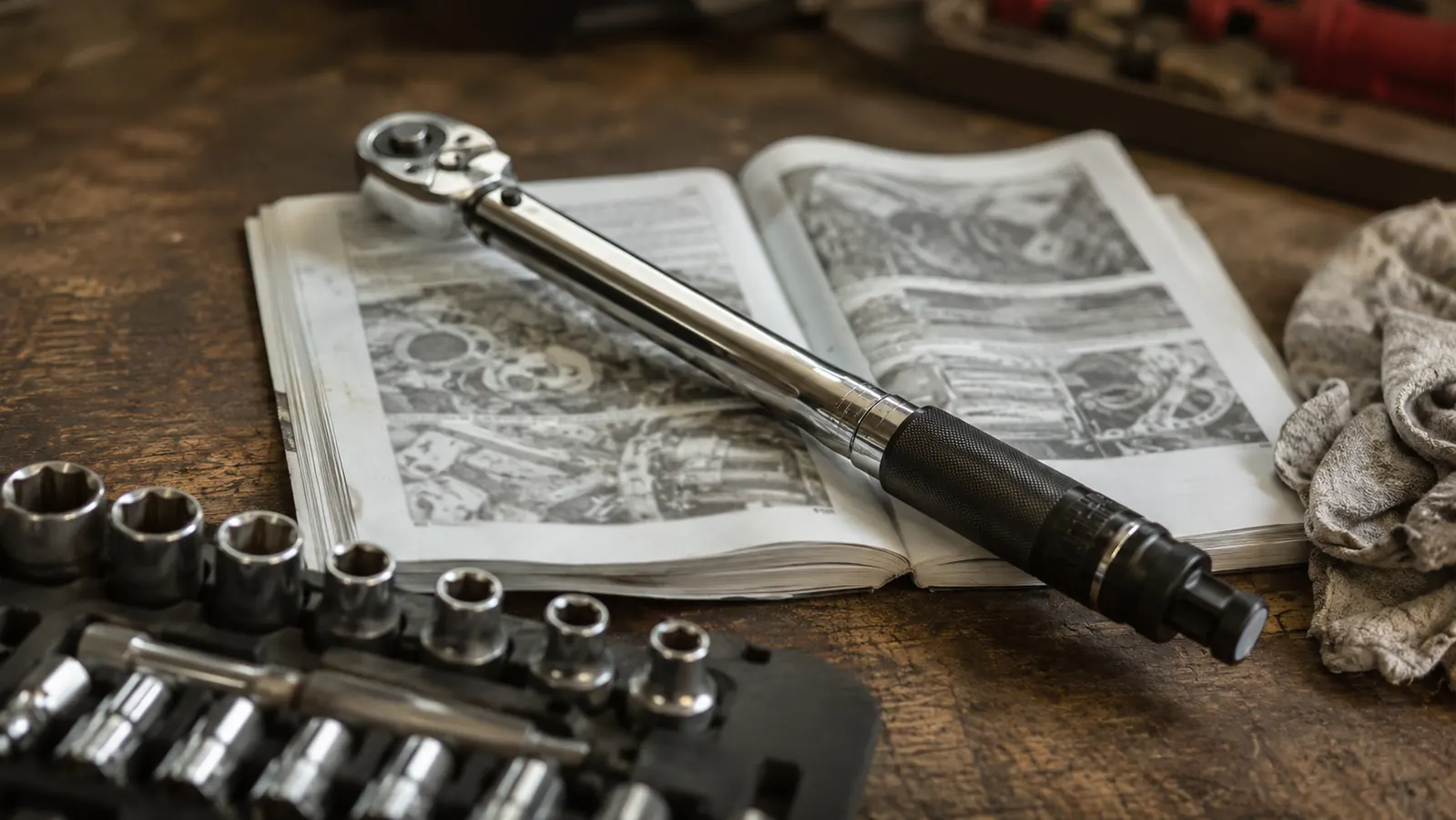
I am not going to pretend it is indestructible, because no torque wrench is, and pretending otherwise is how a guy snaps a bolt or buys a gasket twice. It is a spring tool, and springs can drift. The chrome finish has picked up scuffs and marked where it slid across the bench, the markings have worn slightly, and the shaft shows use, but all of that is cosmetic. The click that tells you when a bolt is at spec is as honest today as it was the week I unboxed it, largely because I treat it the way a calibration tool deserves to be treated.
The honest advice for a wrench you lean on this hard: send it out for a re-calibration check every couple of years, or check it against a digital unit or a beam wrench every few months the way I do. And respect the limits it shares with every click wrench in its class. The low end is not where it wins, so a smaller 3/8-inch unit still has a place in my box for the little fasteners, and I never use it to break a seized bolt loose. That job belongs to a breaker bar. Respecting those two things is a large part of why this one still holds its setting.
Who This Is For
Buy the LX-183 if you are a home builder doing your own engine work, a guy tearing down a top end, or anyone torqueing axles, clamps, and brake bolts and currently guessing at it. It is the right first torque wrench for someone who wants one tool that covers the whole motorcycle range without spending like a pro shop. It behaves well enough to teach you the habit of torquing to spec, and it is the first thing I hand a friend who asks what to buy before their first rebuild. It earned a permanent spot in my box.
Who Should Skip It
Skip it if you only ever touch the small 6 and 8 millimeter fasteners, because the low end of a 1/2-inch click wrench is not where it shines and you will fight its limits all day. In that case a 3/8-inch click wrench is the honest buy. And if you torque the same fasteners all day in a production setting, a digital wrench with a datalog will treat you better. For the rest of us, the garage and home builder, this is the one that made sense and stuck.
What I Liked
- Covers the full 10 to 150 ft-lb range a motorcycle build actually touches
- Clean, audible click you feel as much as hear, even down around 15 ft-lb
- Kept its calibration across 18 months of shop use, two cold winters, and a three-foot drop
- Foot-pound and newton-meter scales printed on the shaft, easy to read in bad light
- Knurled handle and positive adjuster collar that holds its number
- Current price makes it the obvious first torque wrench
Where It Falls Short
- Spring tool, so it needs a re-calibration check every couple of years if you lean on it hard
- Not accurate at the very low end, so you still want a 3/8-inch wrench for small bolts
- Drop it hard on the head and you should re-check it before trusting it again
Alternatives I Considered
I looked hard at the budget click wrenches that crowd the same price range, because they are everywhere and the reviews all blur together. I have also spent time with the pricier beam and digital units the pro catalogs push. The LEXIVON sits right in the middle where it belongs. The digital units are precise, but they cost considerably more, need batteries, and one of them misbehaved for me on a cold morning. The beam wrench I keep for checks is accurate but slow and clumsy on a bike. The LX-183 gives the same repeatable click as wrenches that cost two or three times as much, which is why it has stayed on my peg while others came and went.
Stop guessing at bolt torque and listen for the click
Eighteen months of head bolts, triple clamps, and axle nuts, all at spec, and not one backed out. If you are ready to trust a number instead of a feel, the LEXIVON LX-183 is the wrench to start with.
Amazon Check Today's Price on Amazon →