
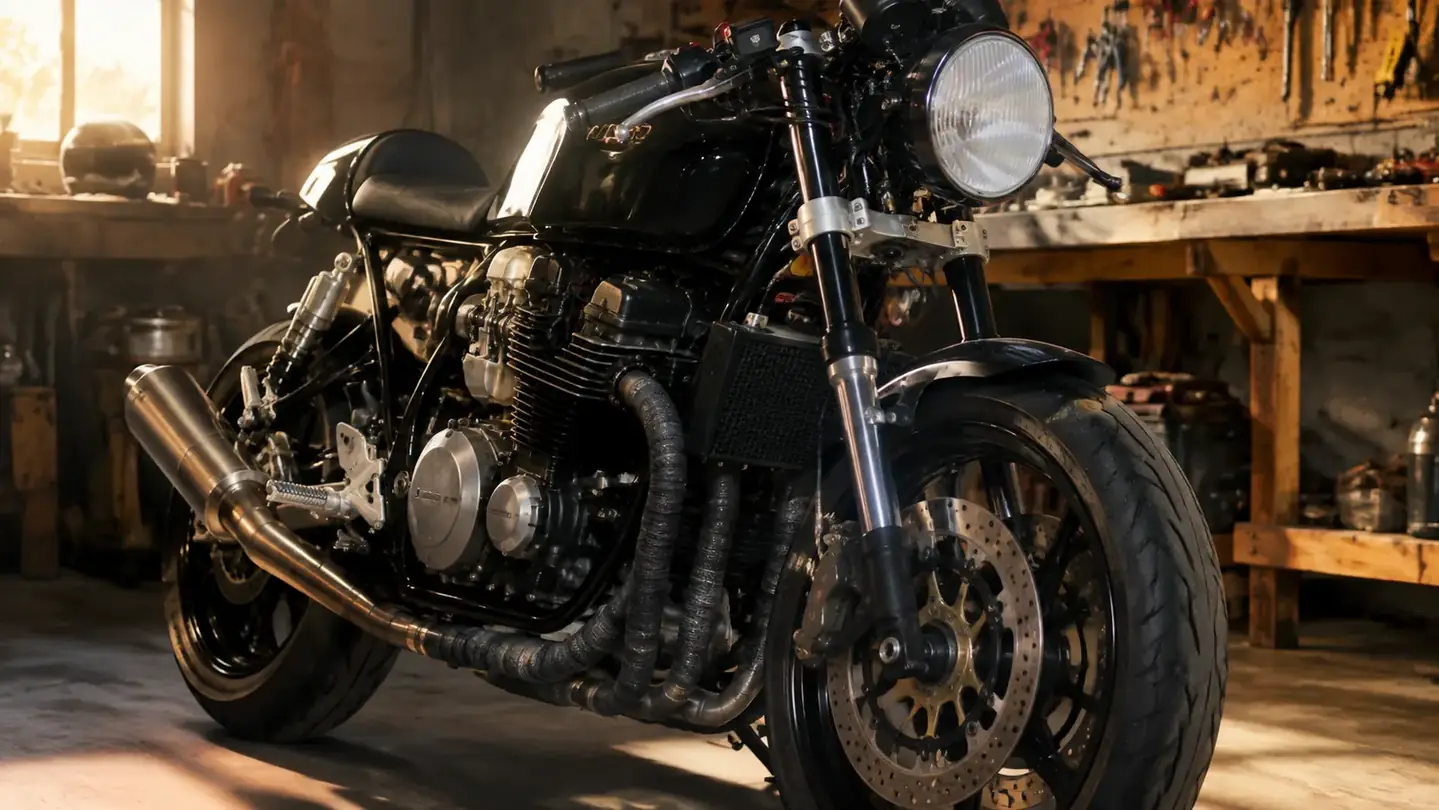
The heat coming off an exposed header pipe is the part of a naked bike nobody warns you about on the test ride. It hits your right shin in traffic, it soaks into the sump on a hot day, and it bakes the wiring that runs down near the frame rail. I tried the bolt-on heat shields that clamp around the pipe, and they help for the one spot they cover and nothing else. Wrapping the header in fiberglass is the fix that spreads the heat out instead of trying to block it in a single place. On my last build I wrapped the front header with a roll of SunplusTrade wrap and the difference showed up inside a week.
People wrap pipes because it looks the part, and it does. But I want to talk about the reasons that are not about looks, because those are the ones that convince me to keep a roll on the shelf for every build. Nearly all of them come down to one word: heat. Here are the ten reasons I keep reaching for the wrap.
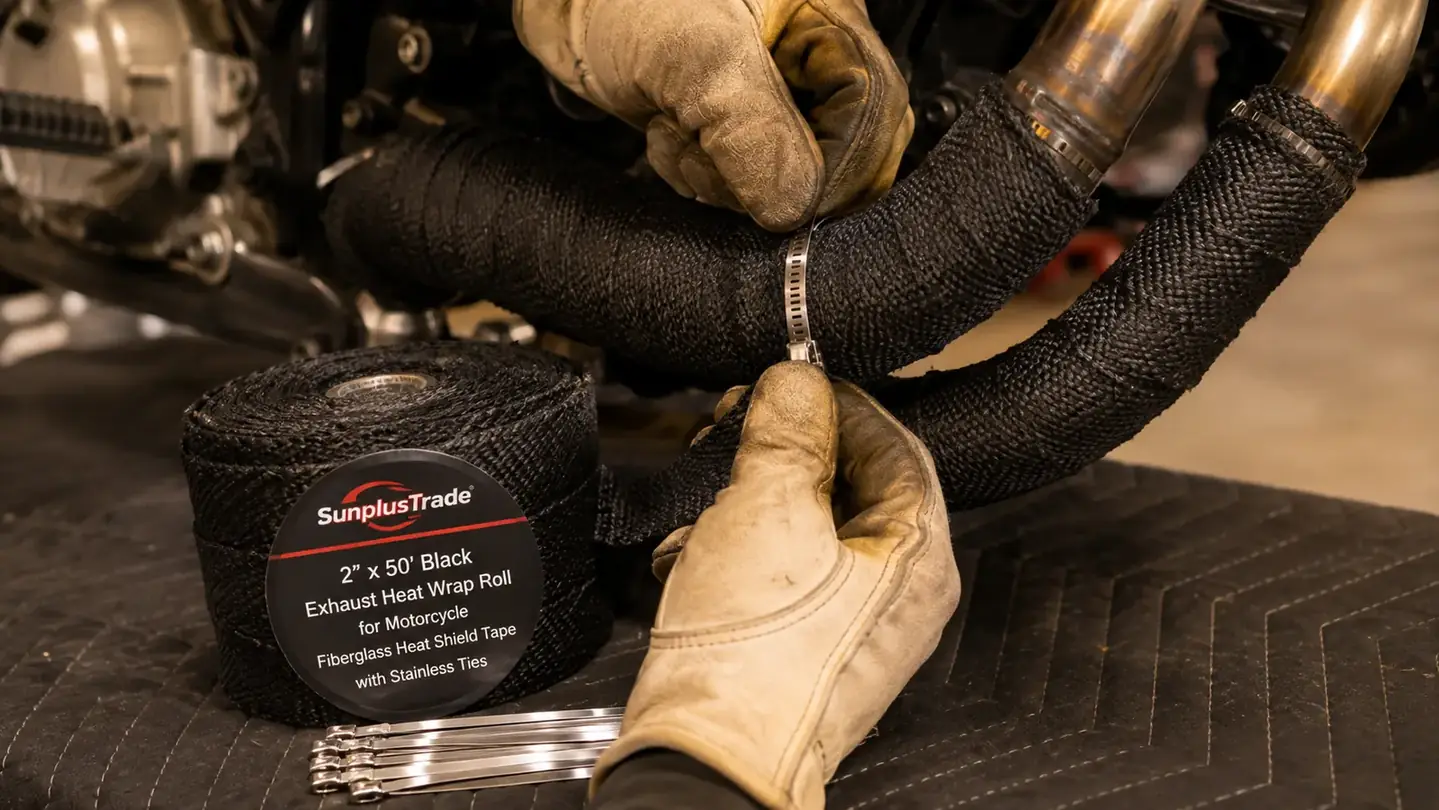
One 50-foot roll covers a header with room to spare, and the stainless ties come in the box
The SunplusTrade wrap I use runs 2 inches wide and 50 feet to the roll, includes stainless steel tie clamps, and costs less than a tank of gas. That is the whole fix for a header that has been cooking your leg and your oil.
Amazon Check Today's Price on Amazon →It takes the blast off your leg on an all-day ride
An exposed header close to the footpeg pours heat straight onto your inner shin, and after three hours it is the only thing you remember about the day. Wrap does not make the pipe cold. It holds most of that heat inside the fiberglass so the surface you brush with your leg runs noticeably cooler. On a bike built for sitting on, that one change is worth the job by itself.
It pulls heat away from your oil, wiring, and fuel lines
Engine oil breaks down faster when it sits hot, and the hottest oil in the sump is the oil closest to the header. On a bike with the exhaust running right under the belly, that is your oil, your fuel line, and a fistful of wiring all cooking in the same pocket. Insulating the pipe drops the heat load on all of them at once, and that is the difference between parts that last a season and parts that last years.
It holds exhaust heat in the pipe where a tuned pipe does its job
A header is engineered to keep exhaust gas hot and moving at speed, because fast-moving gas helps draw the next cylinder's charge through. Let that heat bleed out through bare thin-wall steel and the gas slows down before it ever reaches the collector. Wrap keeps the heat in the pipe where it belongs. You are not adding power with a roll of tape, but you are not throwing any away either, which is exactly what I want from a cheap mod.
It lowers the heat-sink under the tank and seat
On a lot of builds the header runs a few inches under the fuel tank, and on an air-cooled bike that whole area turns into a slow oven. The wrap keeps that radiated heat from saturating the tank, the seat base, and the plumbing tucked underneath. That matters more for rider comfort than most people credit. A tank that is only warm instead of roasting is the difference between a bike you ride and a bike you park.
It protects a chrome or mild-steel pipe from stone chips and road crud
A bare pipe takes every pebble and every splash of road salt the front wheel throws at it, and chrome that gets chipped will not stay chrome long. Wrap is a sacrificial layer. It takes the stone hits, the gravel spray, and the winter grime, and it is a whole lot cheaper to replace than a pipe. On a bike I actually ride, I would rather wear out a roll of fiberglass than wear out the pipe it is wrapped around.
It lets you tuck the header tight against the frame
On a custom build, every inch of ground clearance and every degree of lean angle comes from how close you can fit the pipework. A wrapped header can sit right against the frame and the swingarm without cooking the frame rail or the shock. That gives a builder room a bare pipe simply does not allow. If you have ever had to reroute an exhaust run because the pipe was too close to something it was melting, you already know why this earns its spot.
It makes a summer traffic crawl tolerable
Stop-and-go in July is where an unwrapped bike earns its reputation as a stove. With no airflow, all that heat sits under you and radiates straight up into the seat and your legs. Wrap does not fix the engine, but it takes the one worst offender, the header, out of the picture. On the kind of bike I ride in town, that is a real quality-of-life change on the hottest days of the year.
It is cheap insurance on a pipe you do not want to rechrome
Rechroming a header is not a small job or a small bill, and on an old bike it usually means weeks without the machine in the shop. Wrap is a fraction of that cost and goes on in an afternoon. For a pipe that is already past its prime, a layer of wrap buys it years of service and hides the fact that the chrome is not what it used to be. That is the smartest kind of money: the kind that postpones an expensive job.
It hides the nicks and light rust a used pipe already has
If you bought a project bike with a header that is dinged, scuffed, or showing the first flecks of surface rust, you have two options: pay to make it pretty, or wrap it and make it look deliberate. Wrap covers a multitude of sins and turns a worn pipe into a clean, finished part. Nearly every used bike I have built has benefited from this, especially the ones where the previous owner was not kind to the exhaust.
Stainless ties and a proper overlap survive a season of rain and vibration
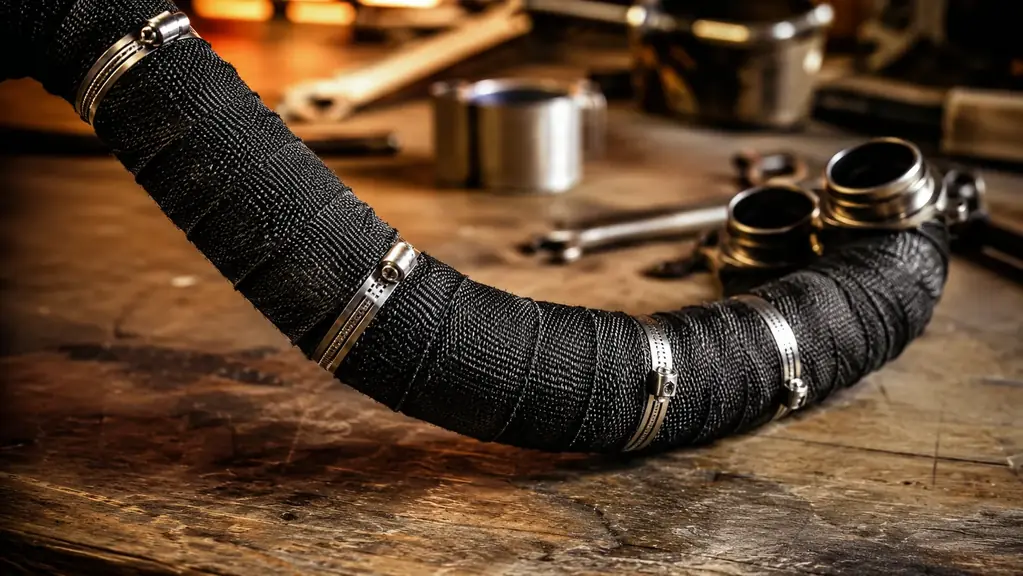
A wrap only works if it stays put, and the difference between a job that lasts and one that unravels is in the hardware and the overlap. This roll comes with stainless steel tie clamps that hold through vibration and weather, and when you lap the wrap about half its width, the rain stays on the surface instead of working in under the edges. A header wrapped right stays wrapped, which is the whole point of doing it once instead of doing it all season.
What I'd Skip
Honestly, wrap is not for everyone. If you are building a show bike and the whole reason you bought chrome was to stare at it, do not cover it up, that would be a shame and a waste. I would also skip wrap if your bike already has heavy rust that is eating through the pipe, because wrap traps moisture against the steel and can make a serious rot problem worse while hiding it from view. And I would not buy the thinnest, cheapest wrap on the shelf, because fiberglass is fiberglass until it starts to sag and fray, and the good rolls are barely more money. Wrapping is a fix for heat and wear, not a cure for a pipe that is already gone.
A wrapped header spreads heat out instead of trying to block it in one spot, and that is the whole reason the fix sticks.
If your header is cooking your leg and your oil, a roll of wrap is the cheapest fix you will find
The SunplusTrade wrap runs 50 feet with stainless ties in the box and goes on over an afternoon. It will not add power and it will not save a rotten pipe, but for heat, protection, and a finished custom look, it is hard to beat for the money.
Amazon Check Today's Price on Amazon →