
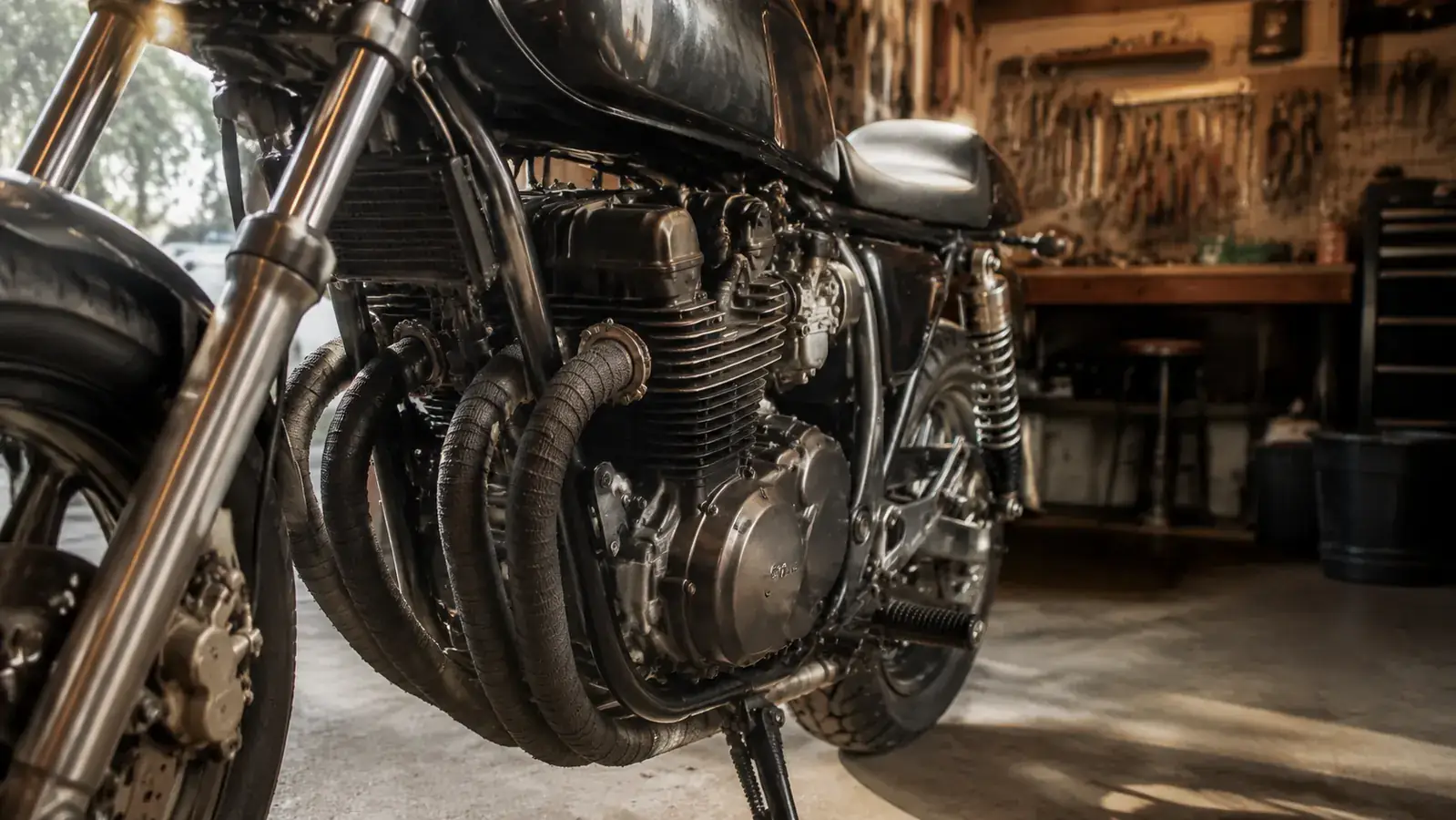
The heat off a free-flowing pipe is the thing nobody warns you about when you start building. A real V-twin with a decent exhaust will cook your right leg at the first long stoplight, and it does worse to your oil sump and the paint than any ten-mile ride you will take before you notice. I have tried chrome heat shields that rattled loose inside a month, silicone tape that went soft and ugly, and the cheapest fiberglass roll the local parts counter stocked, and every one of them taught me what does not hold up. So when the finish came back off my 2001 H-D header and I decided to wrap it, the SunplusTrade 2-inch black roll and its bag of stainless ties is what I grabbed.
A full season and right at 3,000 miles later, the wrap is still on, still tight, and it took more heat off my leg than I expected going in. That is the long take you do not get from a pile of five-star reviews written the day the box landed. So here is the honest version: what the SunplusTrade wrap does well, where it is merely okay, and whether I would spend the money on another roll without hesitating.
The Quick Verdict
The SunplusTrade wrap does what a heat wrap is supposed to do, stays put through rain and heat cycling, and it is honest about its limits. It will not turn a header into an ice cube and the edges want a little care, but for the money it is the roll I put on a daily rider without losing sleep.
Amazon Check Today's Price →Cut the heat off your pipe without shelling out for chrome shields that rattle loose
One 50-foot roll of the SunplusTrade 2-inch black wrap covers a single header with room for a mistake or two, and the stainless ties in the bag are the good kind. For what a day on the bench saves your leg and your oil, it is hard to argue.
Amazon Check Today's Price on Amazon →How I Used It
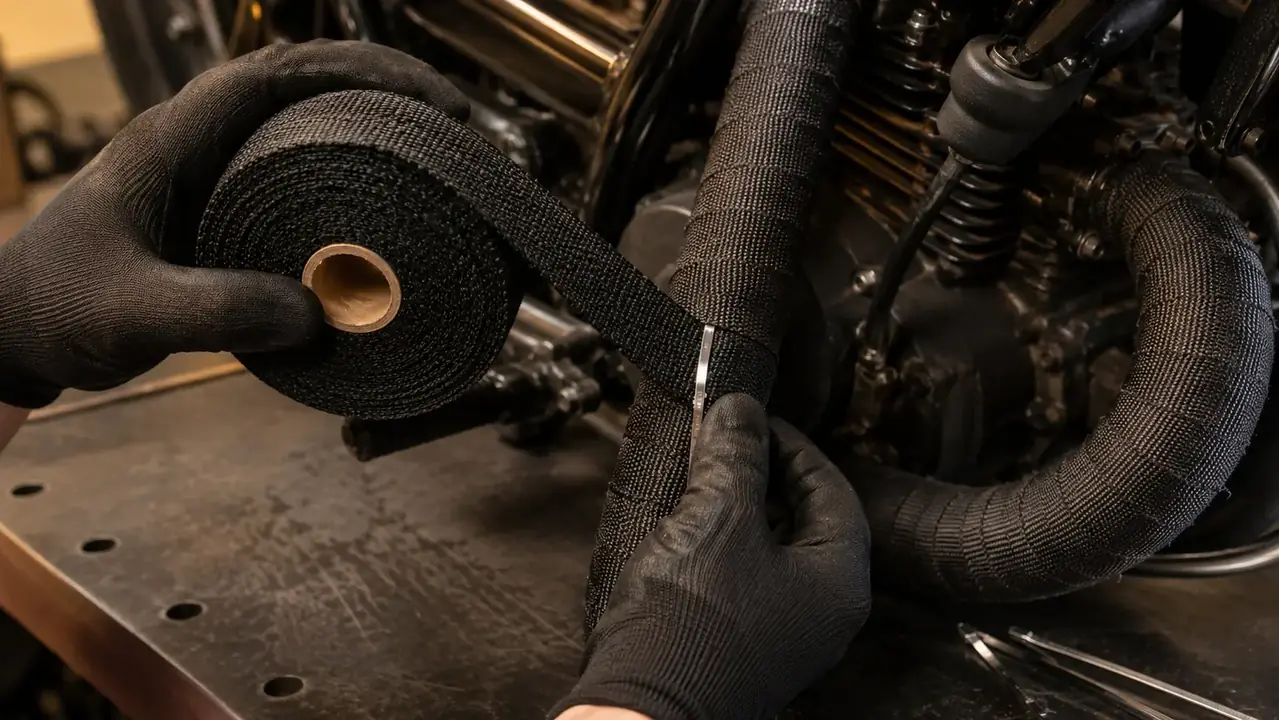
I wrapped the header on the 2001 H-D the way you are supposed to wrap a pipe, not the way half the videos on the internet show it. I soaked the roll in a bucket of water first, which softens the fiberglass and lets you pull it tight over the bends instead of fighting it. The header was off the motor on the bench, so I had clean access and a solid anchor. I laid the wrap on a dry and degreased pipe, overlapping each band by about half its width, keeping a steady pull so the weave seated flat, and working from the head flange out to the collector.
The whole job, from bucket to crimped ties, took me about ninety minutes with a coffee and a radio on. The 50-foot roll was more than enough for one header, and I had maybe six feet left over after I did a short stretch of the crossover. That surplus is worth knowing, because it means you can afford one bad overlap and a reboot without ordering a second roll. The bag of stainless ties gave me more than I needed for the ends and the two mid-pipe crimps, and stainless is the right call, plain steel ties rust into a brown ring on the wrap inside a winter.
I let the whole thing dry a full day before I fired it the first time. If you burn a wet wrap, the steam can push the weave apart and you get a loose, fuzzy band that unravels as it cycles. The SunplusTrade weave tightened up nicely once it dried and first heat-cured, and it took a set that followed the bends cleaner than the cheap roll I had tried the year before.
What the Roll Actually Is
This is a fiberglass heat wrap, 2 inches wide and 50 feet long, and it works the same way every fiberglass wrap on the shelf works. The fiber traps a layer of still air against the pipe, and that air is the actual insulator. It does not lower the temperature of the exhaust gas, it moves the wall of heat off the metal and away from your leg and your oil. That is the whole mechanism, and the SunplusTrade roll is a solid, consistent example of it.
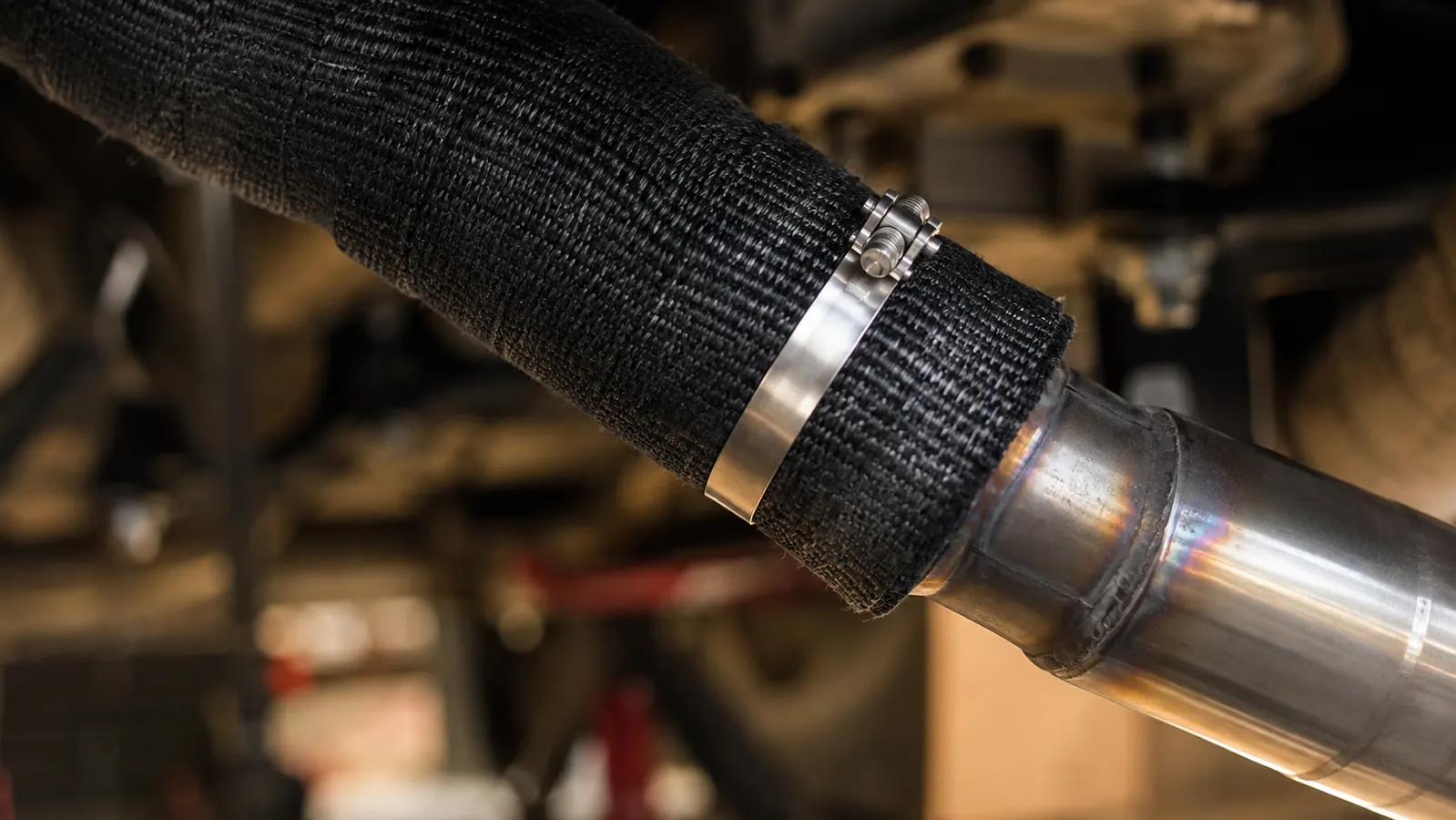
What you are paying for with the SunplusTrade name versus the absolute cheapest roll is consistency and the hardware. The weave is even top to bottom, there were no thin spots or loose strands wandering off the roll, and the thing unspooled straight instead of fighting me on the bench. The included stainless ties are properly made, wide enough to bite without cutting into the weave, and they crimped down tight with pliers and stayed put through the season. On a cheap roll you often get a handful of steel zip-tie style clamps that corrode or slip, and that is where the aggravation lives.
Fitment and the Two-Inch Width
The 2-inch width is the right default for a motorcycle header, and the reason is the bends. A 1-inch tape gives you more control into the tightest radius curves of some four-cylinder header collectors, but it means twice the wraps to cover the same run, which doubles the seams and gives the fiberglass twice as many edges that want to lift. The 2-inch SunplusTrade roll is the sweet spot for a twin header or a street single, where the bends are gentle enough that a 2-inch band seats clean without bunching on the inside of a curve.
Where you want the narrower tape is on the real hairpins, the tight 180-degree collectors you find on some inline-four track pipes. If you are wrapping that kind of header, expect to work the 2-inch band slowly and to let the moisture soften it so it follows the radius instead of trying to fold over itself. For the bikes most of us build and ride, though, the 2-inch roll is the one that looks and lays the best, and it finished my header with a clean, consistent pitch from the flange all the way down.
How It Behaved Over a Season
The number that matters to me is the leg. Before the wrap, that right-side header sat close enough to the rider peg that on a hot summer day I could feel the radiant heat through denim and through a leather boot a little. After a full cure, the difference was real. I do not have a thermal camera and I am not going to pretend I logged numbers, but the radiant heat I could feel through my boot at a stoplight dropped from noticeable to basically a warm patch. That is the whole point of the thing and it delivered.
It also saw weather. The bike got caught in more than a few hard rains, and fiberglass wrap does not love being soaked and left wet. The SunplusTrade weave dried out fine and came back, but it did stain a little and it matted in the spot where water pooled against the crossover. That stain is cosmetic, not a failure, and it is the price you pay for a wrapped pipe that lives outside. A ceramic-coated pipe has the same dirt-and-water story without the fiberglass itch, so if you are squeamish about maintenance, that is worth filing away.
After a full cure, the radiant heat I could feel through my boot at a stoplight dropped from noticeable to basically a warm patch. That is the whole point and it delivered.
One thing to rule out before you wrap is a motor that is actually running hot. If your header is glowing on a warm day or your fuel is boiling off in the line, the cause is usually lean jetting or a pipe routed too close to a component, and fiberglass is only going to hide the symptom. I checked my mixture and my routing before I wrapped so I knew I was wrapping a healthy pipe, and that is why the improvement read as real instead of masking a problem that would come back.
The edges are the honest weak point. Fiberglass wrap works because it is woven and fuzzy, and that same fuzz is what wants to wander at the exposed cut ends. I crimped tight ties right at both ends and that held it, but a couple of loose strands still poked out at the flange end by August. A quick trim with a sharp blade on a cool pipe took care of it. The weave itself shed a little fiberglass dust for the first few hundred miles as it cured and settled, so wear gloves and a respirator when you handle it and keep it away from your skin on the first install.
The other mid-season habit worth having is checking the ties for tension once the wrap has fully cured and settled. Fiberglass relaxes a touch as it takes its set, and the crimped bands can go from tight to snug without you noticing. On mine, the end tie nearest the flange never moved, but the mid-pipe crimp around the crossover needed a light re-crimp at the three-month mark after a full heat cycle. That is a two-minute check with a pair of pliers on a cool pipe, and it is exactly the kind of maintenance the five-star reviews never mention but a wrapped pipe genuinely calls for.
Where It Comes Up Short
No wrap is a substitute for proper heat management on a hot motor. If your issue is boiling fuel or a cooked oil sump because your pipe is routed badly or your jetting is lean and the header is glowing, a roll of fiberglass is a band-aid, not a fix. The SunplusTrade wrap will lower the radiant heat your leg feels, but it will not stop a genuine overheating problem. Fix the cause first, then wrap the pipe to tune the comfort.
The second limit is that it is a one-season-ish cosmetic surface. It does not chip like paint, but it will weather, stain under moisture, and go a little dull over a winter, especially if the bike sits outside. If your project is a trailer queen that you want to look perfect under show lights, a wrap that lives outside all year is going to test your patience. That is true of every fiberglass wrap on the market, the SunplusTrade is not special in that, it is just not exempt from it either.
Alternatives I Considered
The two real alternatives to wrapping are ceramic coating and the thicker budget wraps. Ceramic coating a header is the cleaner long-term answer if you want a permanent, washable, no-itch surface, and it is genuinely better at the edges. But it costs several times what a roll of wrap does and you have to pull the pipe and send it out, which killed the appeal for a daily rider I was not ready to take apart for a week.
I also looked at the other popular fiberglass wraps sold next to it online, and honestly the weave difference was the deciding factor. The SunplusTrade roll unspooled even, held a clean overlap, and came with stainless ties instead of the tinny clamps on the budget stuff. For the small handful of dollars between them, the SunplusTrade version removed the variables that aggravated me the last time around, and that is worth the jump. If you are weighing two specific rolls against each other, the practical differences live in the tie count, the weave consistency, and how clean the roll lays, not in marks on a spec sheet.
What I Liked
- Cut the radiant heat on my leg more than I expected after a full cure
- Consistent, even weave with no thin spots or wandering strands
- 50 feet covered one header with six feet to spare, room for a mistake
- Stainless ties included that crimp tight and do not corrode after rain
- Dried out and came back fine after getting soaked in hard rain
Where It Falls Short
- Fiberglass dust and itch the first few hundred miles, brace yourself
- Edges fuzz and want a trim by late season if you do not crimp ties tight
- Water stain and matting where moisture pooled against the crossover
- A wrap is not a fix for a genuinely overheating motor, only comfort
- Weathers and dulls over a winter if the bike lives outside
Who This Is For
This roll is for the builder who rides what they wrap and wants less heat on their leg and less cooking of the oil without spending the day's budget on ceramic coating. If you are wrapping a street bike, a naked twin, a V-twin rider, or hot rod headers on a fun car, and you are okay spending an evening on the bench and a little upkeep at the edges, the SunplusTrade wrap is the right tool for the job. It is also a genuinely good choice for a first wrap, because the 50-foot length and the good ties forgive the mistakes you are going to make on the first header.
Who Should Skip It
Skip it if you hate fiberglass against your skin and do not want to think about gloves and a respirator, or if your bike is a weekend show piece that sits in a garage and you want a clean, washable surface that does not weather. And skip it if your real problem is a motor that runs hot because of jetting or routing. In those three cases a roll of wrap is the wrong tool and you will be frustrated with a good product that was never meant for that job. For everybody else wrapping a rider, this is the one I reach for.
If you ride what you wrap, this is the roll I put on a daily rider
One 50-foot roll of the SunplusTrade 2-inch black wrap, ties included, and a night on the bench gets a hot pipe off your leg and your oil. For the money it is the wrap I will buy again.
Amazon Check Today's Price on Amazon →