
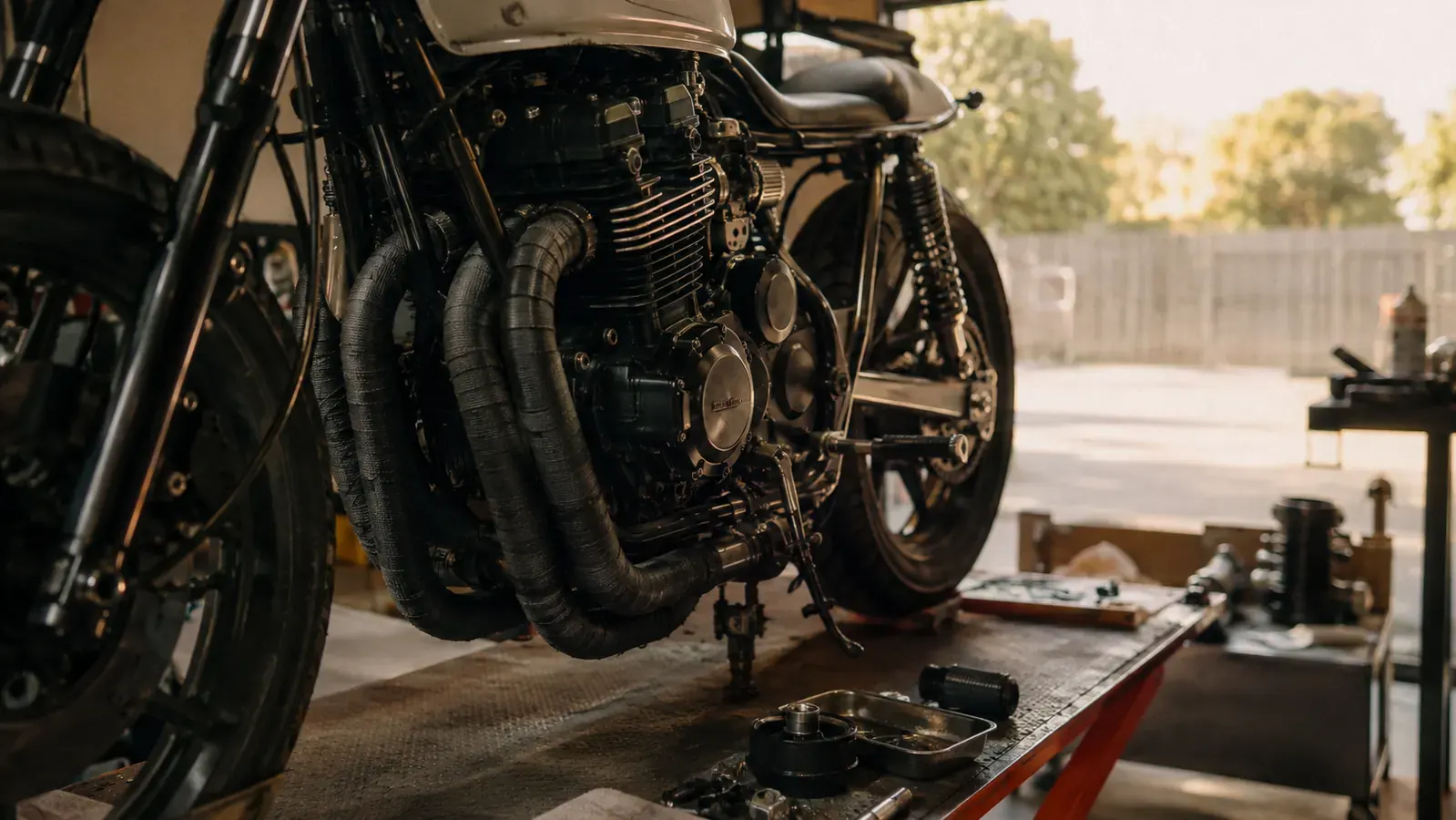
Short answer: both of these rolls get the heat off your leg and your oil, and both are black fiberglass wrap with stainless ties telling you the same story from the front of an Amazon listing. But they are not the same product once you lay them on a pipe and run a season of real miles, and the difference is not heat so much as coverage, tie count, and how the ends hold up. The SunplusTrade 2 by 50 foot roll gives you more material and more ties for the money, and it is the one I reach for on a long header. The ARTR wins on edge finish and tying off at the ends, which matters if you are wrapping short sections where fray kills a job.
| SunplusTrade | ARTR | |
|---|---|---|
| Roll size | 2" x 50' with 12 stainless ties | 2" x 16.4' to 50' depending on the listing |
| Heat rating | Fiberglass, rated to about 1,000 F continuous | Fiberglass, rated to about 1,000 F continuous |
| Tie count | 12 stainless ties in the box | Fewer ties included with the short rolls |
| Edge finish | Good weave, but it frays at cut ends | Cleaner cut edges that stand up better at tie points |
| Best for | Long headers and full exhaust runs you want to cover once | Short sections, mufflers, and tidy little patches |
For a full header, the 50-foot SunplusTrade roll is the one that covers the whole pipe and still leaves ties to spare
One roll does the whole run on most single-cylinder and twin builds, and it comes with enough stainless ties that I did not run out halfway down the header. That is the whole job wrapped once, not a patchwork.
Amazon Check Today's Price on Amazon →Where SunplusTrade Wins
The big one is coverage per dollar, and it is not even close. The SunplusTrade roll is 50 feet, and that changes the whole job before you ever pick up the pliers. I wrapped the full two-into-one header on an old V-twin and still had several feet left over. The overlap math is why: at the steady one-third overlap that keeps no bare metal showing, each 2 inch pass only advances the job about an inch and a third down the pipe, so a full header eats material fast, and a 50 foot spool covers both cylinders, the collector, and the flange without running dry. With the shorter ARTR rolls you measure the pipe, second-guess the overlap, and order again before you reach the last flange.
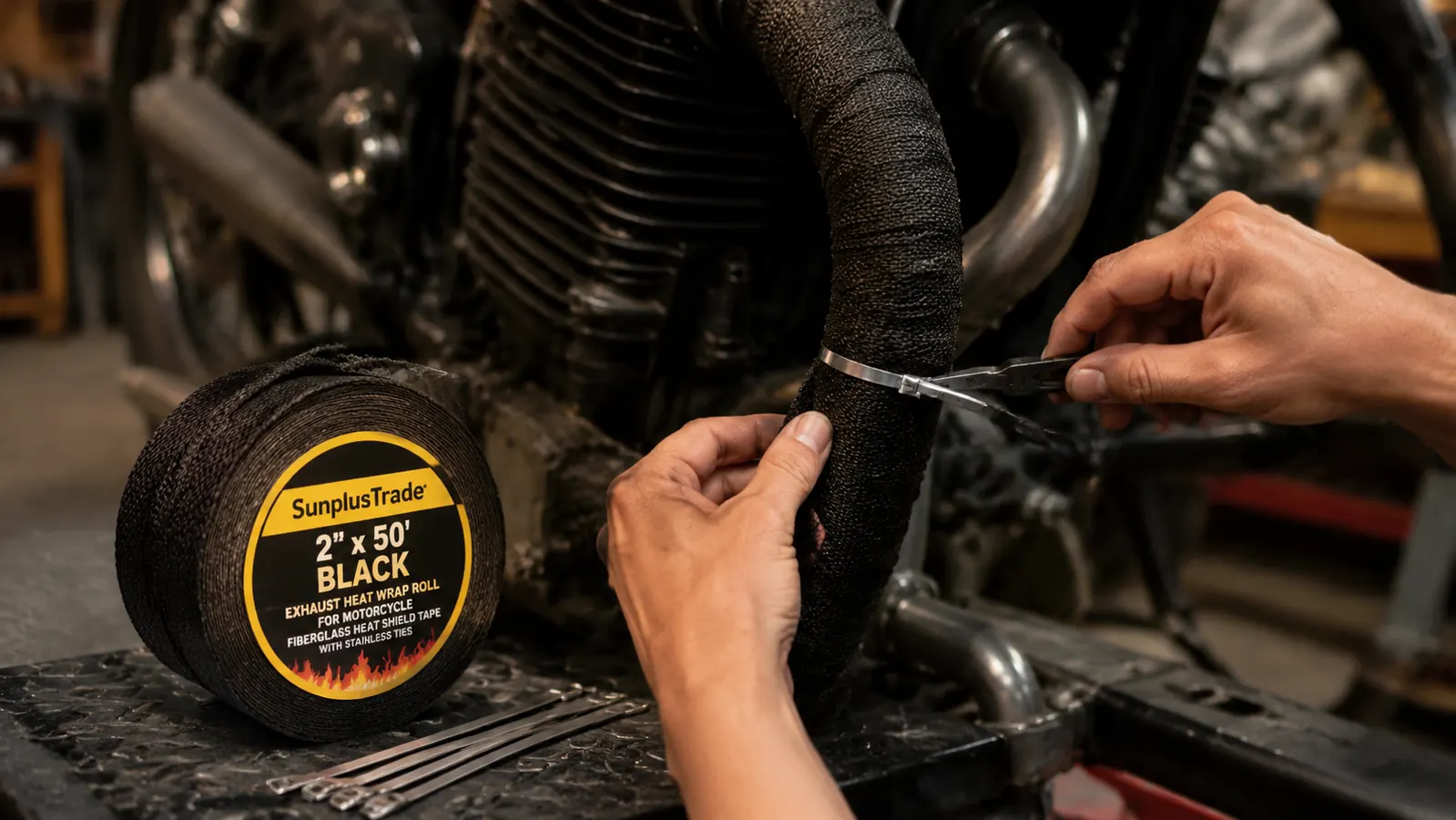
The tie count matters more than people expect, and it is why this roll finished clean. SunplusTrade sends 12 stainless ties with the 50 foot roll, enough for a tie every few inches plus one cinched at each end. None of these ties have backed out on me. They crimp down firm, stay put across a season of heat cycles and vibration, and none snapped while I was cinching them tight. Most useful was being able to place them where the pipe needed them instead of stretching the last pair across a long stretch, which makes for a straighter, flatter job along the run.
It is also an easy material to work on a long bend, and that counts when you are feeding wrap around a flange or a tight angle on a big twin. The SunplusTrade weave lays down flat and takes tension without twisting or rolling over on itself, so the overlap stays even while you feed angle from a roll in one hand. A cloth that fights you turns a 45 minute job into an afternoon. This one is forgiving enough that I wrapped the rear cylinder, the collector, and both flanges in a single sitting.
Being honest, SunplusTrade is not perfect, and the weakness is at the cut ends. The weave is good and the body of the wrap holds up, but once you trim it to length the cut edge can bloom into a fringe of loose fiberglass if you do not cut it clean and get a tie over it right away. I learned to cut it wet with sharp scissors and snag each end under a tie before it frayed out, and then it is a non-issue. And like any inexpensive black fiberglass, the color dulls toward gray over a hard season, which is cosmetic and does nothing to the heat control.
Where ARTR Wins
I will give ARTR the edge finish, and it is not a small thing if you wrap short sections. The cut edges on the ARTR hold together better once you trim them to length, so the ends at your tie points do not bloom into a fan of loose fiberglass the way a poorly cut edge on the SunplusTrade will. On a muffler or a short pipe where the two ends are the most visible part of the job, that cleaner edge is what makes it read as a proper wrap instead of a rag tied on with hopes. The weave is tighter and the fibers bind together more at the cut, exactly what you want when a flat, even edge is how you judge your own work.
ARTR is also the easier buy when you only need a little, and being honest about that keeps this from being a one-sided pitch. If your heat problem is just one section, say a mid-pipe running past your calf or a stretch near the oil tank, you do not want 50 feet sitting in a drawer for three years. A short ARTR roll covers the patch job without you wrestling a full roll around the shop. I wrapped the junction where the catalytic section on a project bike dumps heat straight at a brake line, and the ARTR did that little job without me coiling the remainder. That tidiness is worth something on the bench.
The honest concession is price per foot, and I am not going to pretend otherwise. When you buy ARTR in a small roll you pay more for each foot of material than the 50 foot SunplusTrade, the same math that always makes bulk look generous. For a whole header that premium adds up and pushes the total cost up for no real benefit, since the heat control is identical. But for a single short patch that higher per-foot cost is a rounding error against buying a big roll you use a tenth of. So ARTR makes sense exactly when the job is small, and that is what its tidy buy is built for.
How They Compare on the Bike
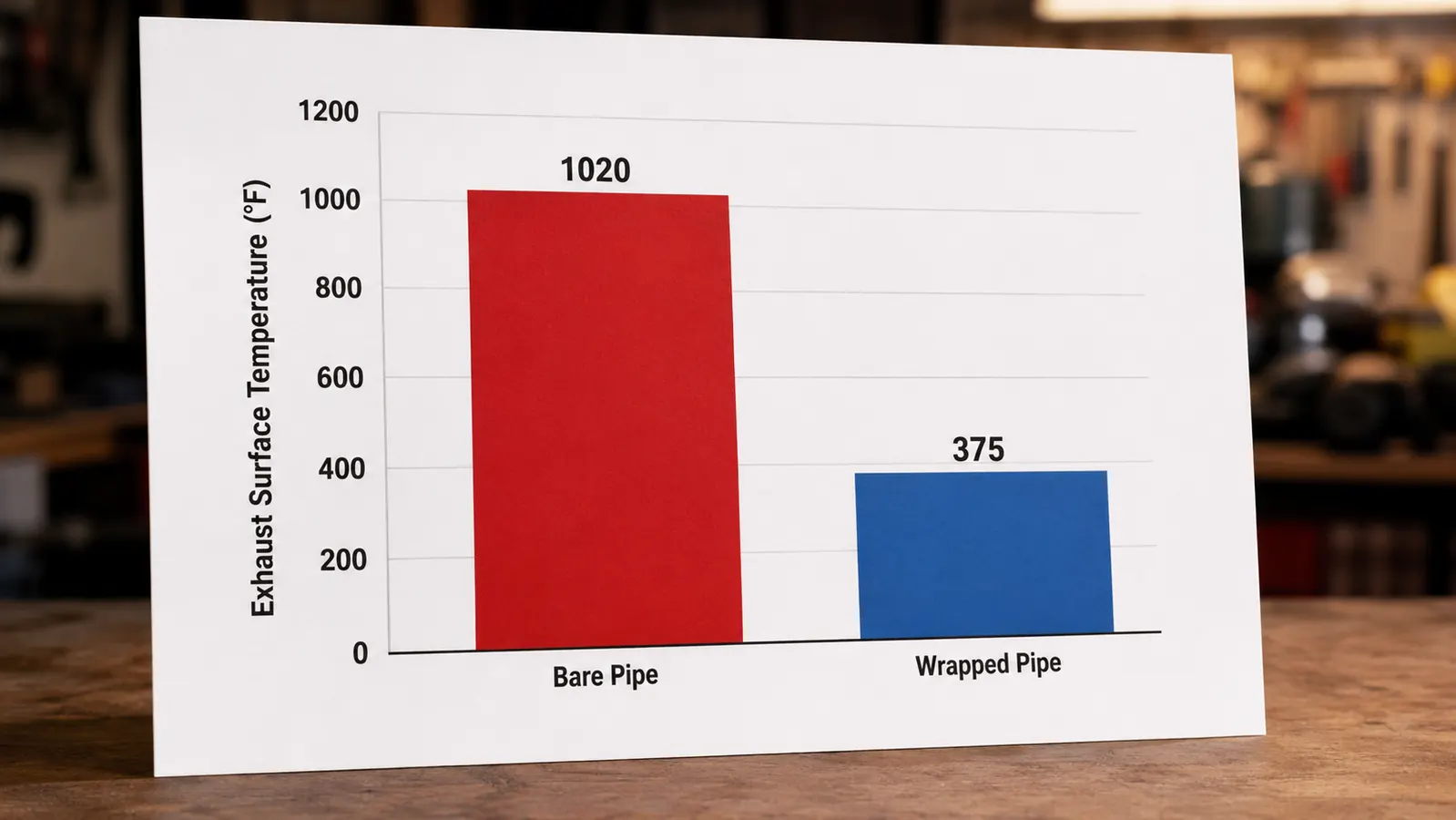
Heat control is the reason anyone wraps a pipe, and here the two are close because they are both fiberglass rated to the same ceiling. On a warm afternoon I ran the SunplusTrade-wrapped header and measured the surface next to a section of bare pipe, and the wrapped side read clearly lower, enough that my leg and the oil tank stopped cooking on a long ride. Neither roll beats the other by a meaningful margin on plain heat. The fiberglass is doing the work either way, and you would be hard pressed to tell the two apart on a temperature gun.
The place the difference actually showed up was durability over a season, and that came down to prep more than brand once the wrap was on. Both rolls shed heat about the same, but a wrap that frays and unravels is a wrap that stops doing its job and starts looking bad. The fix on both is the same and it is the difference between a job that lasts and one you redo in the spring: soak the fiberglass in water before you lay it, wrap with a consistent overlap so there are no bare gaps, and let it shrink down tight as it dries. Done that way, both stayed put on my bikes through rain and a hard season without the edges peeling back.
One thing to watch on either roll is fiberglass itch while you work, and it is real. The loose fibers get on your skin and in your gloves, and you will regret not wearing a long sleeve and some barrier cream for about a day. That is not a point for or against either product, it is the nature of the material, but it is worth knowing before the first wrap. The clean edge on the ARTR sheds a little less fuzz than the SunplusTrade when trimmed, which is part of why that edge finish earns it points.
One thing the listings do not tell you is that the 1,000 F rating on both rolls is a ceiling, not a promise for how you will actually ride, and I would not trust either fiberglass to shrug off a long stint at wide-open throttle on a big twin without a solid overlap and a coat of ceramic spray on top. Heat rating claims on inexpensive wrap are generous, so take them as a guide and size your layers to the abuse instead of the label. On ties, a single stainless tie is a single tie regardless of brand, and I have seen both names hold fine and both fail when the wrap underneath was not cinched against a clean seam. Keep a handful of extra stainless ties either way and you remove that variable.
Fifty feet of SunplusTrade wrapped the whole two-into-one header and still left a handful of ties, and nothing has backed out since. That is what earns a roll its place.
What the Installation Tells You
You can learn more about a roll of wrap from ten minutes of installing it than from any listing photo, and that is where the two diverge on feel. The SunplusTrade fiberglass lays down flat and takes a clean overlap without fighting you, which matters on a long header where you are feeding an awkward angle around a flange. It is a workable, honest material that does what it says. The ARTR handles about the same going on, but its advantage shows up at the cut, where the weave holds its edge instead of shedding a fringe of loose strands onto your bench and into the weave of the next stretch.
Tying it off is the other tell. On the SunplusTrade I had twelve ties to place where I wanted them, so I could cinch the center of each section and still have ends covered without robbing hardware from the next stretch. On a short ARTR job the included ties are enough for the few points you need, and the cleaner edge means the end ties sit flat instead of flaring. Neither is a hard install, but one rolls out of a full 50 foot spool with room to spare and the other is a tidy little unit sized to the pipe you are covering.
One more honest note on getting it tight. However you go, run the wrap with a steady one-third overlap so no bare metal peeks through, and do not pull it drum-tight while it is wet and expect it to stay that way once it shrinks. Leave it snug and let the material do the final tightening as it dries. I have seen both names ruined by someone laying them on too loose, then blaming the roll when the gaps showed up. The material is only as good as the install, and a patient wrap wins over a fast one.
Who Should Buy Which
If you are wrapping a full exhaust, a two-into-one, or any pipe long enough that you would need a yard of wrap or more, get the SunplusTrade 50 foot roll. The coverage and the tie count mean you do the job once, you do it right, and you are not hunting for a second roll halfway down the header. That is the everyday buy for anyone building or customizing a bike, and it is the one that earns its spot on my bench. Spreading the roll across a full header keeps the cost per inch of pipe covered down where it should be.
If all you need is one short section or a muffler, and clean cut edges at the ends are what will make it look right, the ARTR short roll is the honest pick. It wastes less, it ties off tidier at the ends, and there is nothing wrong with admitting you only need 16 feet of wrap for the job in front of you. You are paying a little more per foot for the smaller package, but on a patch that is a fair trade for not having a 50 foot roll gathering dust and for getting edges that sit flat at the tie points. On that kind of job the ARTR is the one I would grab.
There is a middle case worth naming, because it is where people get it wrong. If you think a short roll might cover a stubby single exhaust, measure it first, add for the one-third overlap and the end tails, and then double the number you feel good about. Wrap eats far more than the plain pipe length suggests once you account for overlap, and I have seen people buy one short roll for a pipe that needed two, then jam the job in with gaps showing. If you are anywhere near the boundary, step up to the 50 foot SunplusTrade and you will not be caught short.
The closing call is simple, and it is the same one my bench always lands on. Different jobs, different rolls, and buying the one that matches your pipe is the whole trick. For a full build or a long header, SunplusTrade is the everyday workhorse that covers the whole run with ties to spare. For a tidy patch on a short section, ARTR is the cleaner, less wasteful pick. The trick is not grabbing whichever listing has the most reviews, it is sizing the roll to the work, and on that the honest answer differs depending on what is on your lift.
If it is a full header you are wrapping, grab the 50-foot SunplusTrade roll and do the job once
Enough material to cover the whole run with stainless ties to spare. That is the difference between a wrapped pipe and a wrapped pipe you can stop thinking about.
Amazon Check Today's Price on Amazon →