This is the review I wish somebody had written before I bought mine. The GRAND PITSTOP Groller pops up as the top result every time you search for a way out of cleaning a chain on your knees, and the 3,000-plus reviews read like they were all cut from the same sheet of praise. Nobody has a bad word. So let me be the guy who does one thing the listings won't: tell you straight what this stand does, where it draws the line, and which bike it refuses to lift a tire for.
Mine has been under the same two bikes for most of a season. It gets dragged out two or three times a week, it's been rained on, kicked around the corner of the shop, and used for nearly every chain job and rear-wheel detail I do. I am not unimpressed. It does its one job genuinely well. But the product copy sells it as a solution for every bike inside a 600-pound window, and that is the part I want to poke at.
The Quick Verdict
A capable rear-wheel roller that is genuinely great at the single thing it does. It is not the universal stand the listing implies. Mind the 600 lb and 240 mm ceilings and it will earn its shelf.
Amazon Check Today's Price →It rolls your chain work off the floor, but only if your tire fits the cradle
Before you add it to the cart, put a tape on your rear tire and weigh what's actually sitting on it. Inside the window, the GRAND PITSTOP Groller is a solid buy. Outside it, it's the wrong tool.
Amazon Check Today's Price on Amazon →How I've Used It
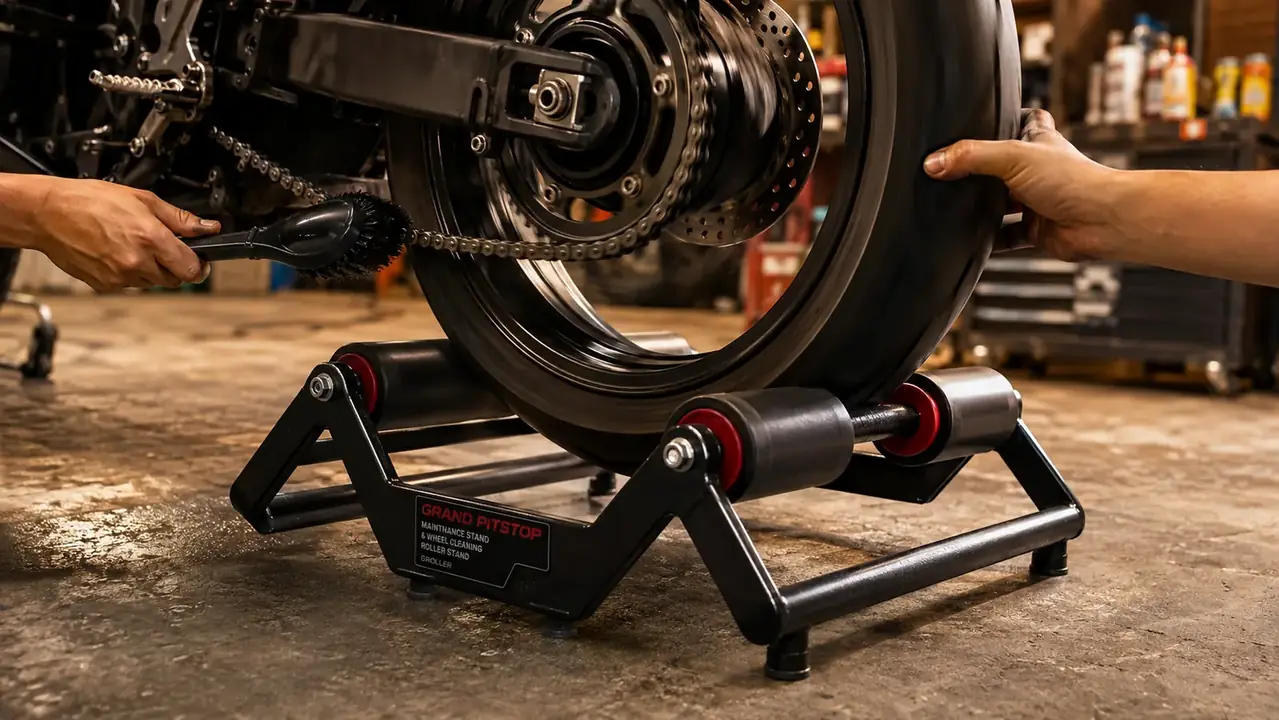
For a rear roller, setup is dead simple, and that is a point in its favor I want to lead with. You do not lift the bike. You get the rear end up onto the lip of the arms by rolling the stand under it, either by backing the bike onto it or lifting the wheel an inch to seat the tire and letting it settle down onto the roller. Once it's seated, the rear wheel spins completely free by hand, with nothing dragging against the rubber. That free spin is the entire point of the stand.
I run mine for three jobs. The main one is chain maintenance, same as everyone. With the rear wheel spinning, I can run a grunge brush around the full loop of the chain without craning my back, wipe the chain dry, then lay down lube and rotate the wheel to hit every single roller. The second job is wheel and tire cleaning, because you can turn the whole wheel to scrub the spokes and the tread without repositioning anything. The third is rear brake checks, since the caliper and the disc sit easy to get at with the wheel clear of the floor.
What actually sold me is how little it aches to do the work now. On the side stand, I used to do the chain in three or four awkward passes, reaching around the swing arm, and I would call it good and lube it uneven. On the roller, one clean pass and the chain is done. That is the honest, unglamorous payback of this thing. It takes a job you have been avoiding and makes it tolerable enough to do on schedule, and a maintenance job you actually do beats a perfect one you skip.
And it has lasted. That is the part the reviews skip, so I'll cover it. After a season of being dragged in and out of the corner, rained on once, and kicked around the way any shop tool gets kicked around, the GRAND PITSTOP pads have held their shape, the arms show grime but no cracks, and the roller still spins as free as day one. The one thing I'd flag is the surface finish on the arms. Leave it parked outside in the weather and it will start to dull and pit, so store it where it stays dry and it will outlast your interest in chain jobs.
The Roller Arms: How the Cradle Actually Holds Your Tire
The working part is a pair of arms, one on each side, that cradle the rear tire while the wheel rides on a roller. Each arm carries a few layers, including a padded composite cap that sits against the rubber. The wheel seats down into the cradle, and because the arms hug both sides of the tire, the bike stays upright on the roller the way it would on flat ground, with the front wheel planted and the whole thing balanced on those three contact points.
Here is the honest bit about that cradle. It holds a tire that fits. On a standard road tire under the width ceiling, the bike sits dead stable and you can spin the wheel with one finger. But the fit is not forgiving. If your rear tire runs wide, or the center of the wheel is heavy, the tire sits deeper into the cradle and the roller has to work through a lot more contact patch, and the effortless spin turns into real rolling resistance.
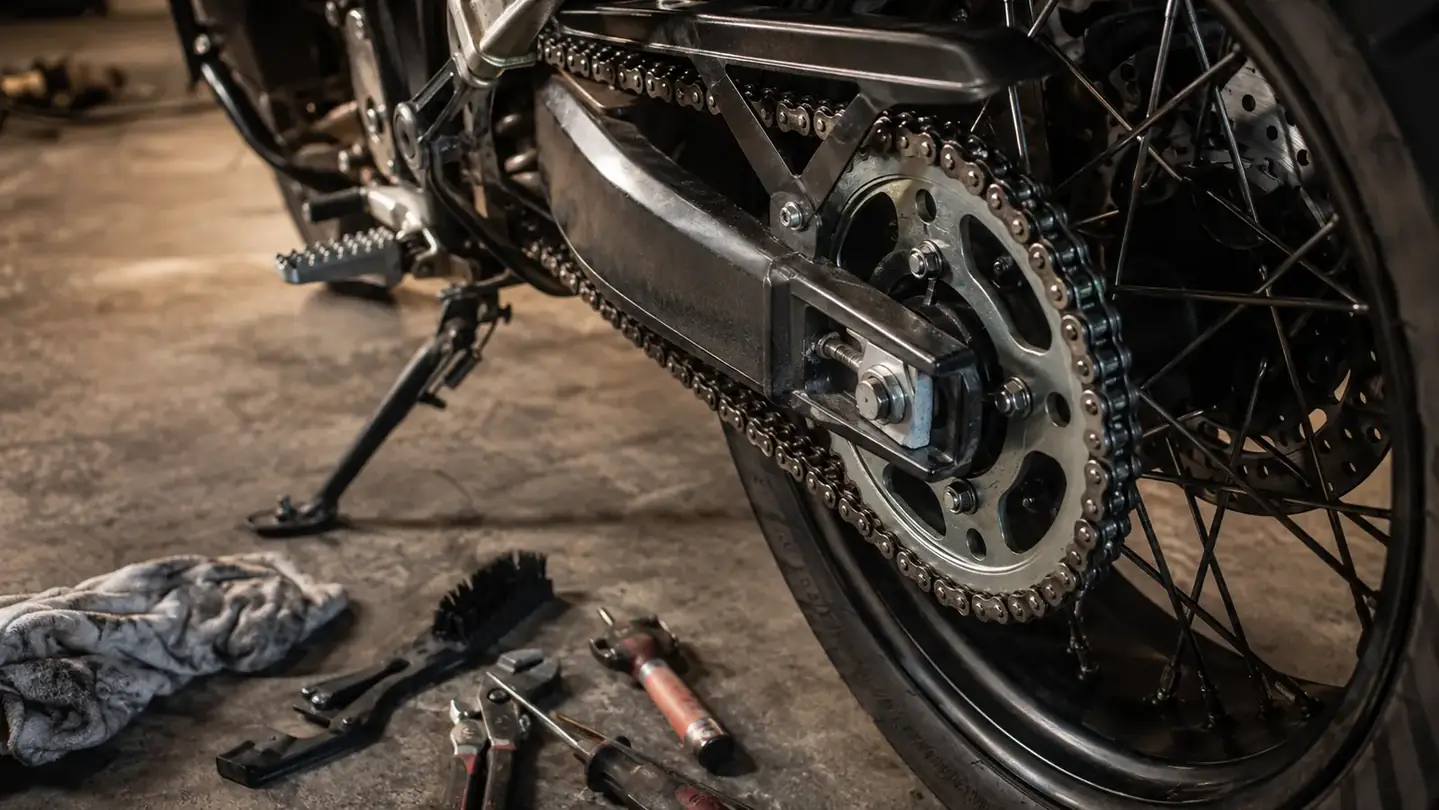
One maintenance note I'll throw in because it saves you from a mystery. The roller itself is the bit that collects grunge. Chain cleaner and lube settle into it over time and they build up a film that makes the spin noticeably less free. A couple of shop rags and a spritz of degreaser keeps it turning like new. It is not a sealed bearing unit, so it pays to give the roller a wipe every few chain jobs rather than wonder why the wheel suddenly feels draggy.
I also want to be straight about stability, because it is the thing most first-timers ask me about. A roller stand does not lock your bike in place. It is not a paddock lift with hard bosses that grab the swing arm. The rear wheel is free to rotate and the bike sits balanced on the roller plus the front tire. That is fine for turning the wheel by hand. It is not a place to hang your weight off the rear end, and the moment it rocks back onto the stand alone, keep a hand on it.
The 600 Pound Rating Is Doing a Lot of Work
Now the number that trips people up. The sleeve says bikes under 600 pounds, and the review section behaves like it handles anything with two wheels. In real garage terms, 600 pounds is a soft number. The stand lifts a wheel by rolling under a tire that is already carrying the bike's rear share of the weight, so it is not hoisting a suspension, but the rollers and the arms still carry a real load every time that tire comes to rest on them.
I can feel the difference on my heavier machines. A middleweight adventure bike sits on these arms and it's fine, solid, no drama. The heavier late-model tourer in my shop feels like it's asking more of the stand, and the roller starts to bind a touch when I spin the wheel, because that much tire on those rollers is a fair amount of rolling resistance through the cradle. I wouldn't want to trust this under the rear of a full dresser, even if the catalog number says it's inside the window.
And be honest about where a bike's weight actually lands. The largest share of most machines sits on the front wheel, not the rear. So a wide-ratio cruiser with a fat rear tire and a light front end can plant more load on the roller through the rear than a number on a box suggests. You are not buying a lift. You are buying a cradle for a wheel, and a wheel carries what it carries.
The practical rule I come back to, for how to buy: if your bike sits comfortably under the weight and your tire comfortably under the width, this is a two-minute setup to a free-spinning wheel and there's nothing to worry about. If you are anywhere near either ceiling, the headroom is gone, and a heavier duty stand makes more sense. That single rule has answered more questions in my shop than the manual ever did.
The 240mm Tire Width Ceiling: The Detail Everyone Skips
Here is the one that will bite you, and it is sitting right in the title if you read the fine print. The Groller is built for tires narrower than 240 millimeters. That sounds generous until you stand a cruiser in front of it. Modern fat-rear cruisers and big tourers routinely run rear tires in the 180 to 240 range, and some oversize OEM hoops run wider than the cradle will comfortably take.
When a tire is too wide for the cradle, it does not seat down between the arms the way your street bike does. It rides up on top of the roller arms, almost like it wants to climb out over the padded cap on each side. The wheel will still spin, sort of, but you are fighting the geometry the whole time and the tire is not being held the way it should be. That is exactly how you end up with a bike that feels like it's going to roll off the stand, which is the one thing a maintenance stand must never do.
So before you hit buy, put a tape on your rear tire and check the number. Under the ceiling and under the weight, you're inside the design window and the stand does its job well. If either one sits close to the line, I'd rather you read about the misted fit here than find it sliding around after you've carried the box home.
What a Roller Stand Is Not (So You Don't Ask the Wrong Thing of It)
A roller stand and a paddock stand look like distant cousins and do completely different jobs. A paddock stand has lift arms with rubber bosses that grab the swing arm or the bottom of the forks and lift the whole wheel clear of the ground so you can pull the wheel, change a tire, or clean it with nothing touching the rubber. The Groller is not that. Its wheels stay on the ground under the roller arms. You cannot pull a rear wheel with it, and you cannot treat it like a lift.
That is not a flaw, it is the design, but it is the single most common source of disappointment in the reviews. Plenty of people buy one expecting rear-wheel lift and find out after the fact that it is a roller for maintenance, not a lift for removal. If your goal is dropping the rear wheel to change a tire or service the hub, this is not the tool. If your goal is spinning the wheel to clean and lube the chain, it is exactly the tool.
I'll say it plainly so there's no confusion about where I land. Part of me wants to tell you to spend more and buy a proper rear lift that gets the wheel off the ground for real. For a full-send approach that is a fine answer, and I own one. But there are jobs where lifting the wheel is overkill and the roller wins, because it is faster to set up and it keeps the tire on the ground where you can spin it against the brush. These are two tools for two jobs, and you will probably end up talking yourself into both eventually.
On value, I'll give you the straight math. For a rider inside the window, the GRAND PITSTOP earns its keep within the first season, because it turns a chore you would dodge into a five-minute job you actually do. For a rider outside the window, no price makes a bad fit good, and buying cheap to avoid a proper lift is how you end up buying twice. So the decision is not really about money. It's about whether your rear tire and your weight actually fit this cradle.
What I Liked
- Genuinely free-spinning rear wheel makes chain and tire work fast and easy
- Sets up in under a minute with no lifting or wrestling
- Padded, stabilized cradle holds a road tire inside the width rating well
- Cheap relative to a real rear-wheel lift for riders who only need a roller
Where It Falls Short
- Will not lift or pull a wheel; it rolls a tire, it does not raise it
- The 600 lb and 240 mm ceilings are softer than the copy implies
- Wide or fat rear tires ride on top of the cradle instead of seated in it
- Not a stable place to hang weight off the rear; balance is on three points
A roller stand is not a lift. It rolls the wheel for the jobs where you don't need the wheel off the ground, and that one distinction is the whole review.
Who This Is For
Get this stand if you ride a bike inside the weight and tire windows and your main annoyance is the chain lube and wheel detailing that used to have you bent over the floor. It is for the rider who wants the rear wheel to spin free and clean so maintenance actually happens on schedule, not just when the chain gets sloppy enough to complain. For that honestly narrow-but-common use, the GRAND PITSTOP is a good buy and it will keep its temper for years if you keep it dry.
Who Should Skip It
Skip it if your rear tire runs wider than 240 millimeters, if you ride a full dresser or anything heavy enough that the roller starts to bind, or if what you really want is to pull a rear wheel off. Those riders should save the money and get the right paddock stand or a proper lift, because buying a roller and expecting lift is how you land disappointed to find a second tool in your cart anyway.
Bottom line: a great roller, priced right, for bikes that fit the cradle
Inside the 600 lb and 240 mm windows, the GRAND PITSTOP Groller is an easy recommendation and it will outlast the regret of every chain job you used to skip. Check today's price and get your rear wheel off the floor.
Amazon Check Today's Price on Amazon →